Lateef's Restless Search for New Sound
Lateef abandons the expected and hunts for color in unlikely places—cello, oboe, flute all pushing against conventional jazz trio form.
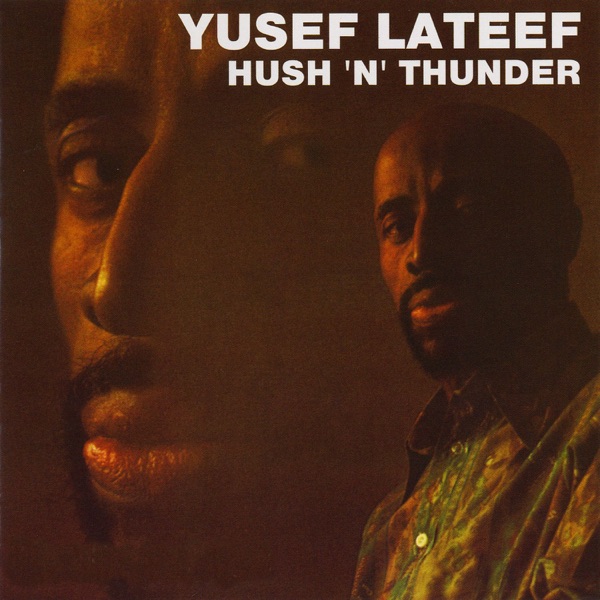
By the time Lateef recorded Hush 'n' Thunder, he had already spent years moving between styles and instruments, refusing to settle. This album captures him mid-search, still early enough in his recording career to take real risks, restless enough to treat the standard trio format as a problem to solve rather than a foundation to build on. The addition of Kermit Moore on cello is the key move—it splinters the sound immediately, replacing the warmth of a piano trio with something stranger and more angular.
Lateef moves between flute and oboe, sometimes simultaneously layering tones in ways that feel almost orchestral. Albert "Tootie" Heath and the bass player (either Bob Cunningham or Bill Salter, depending on the take) lock into a conversation that's almost conversational rather than propulsive. The rhythm section listens; Lateef doesn't play over it. Tracks feel less composed than explored—a melody might appear, dissolve, then return transformed. There's something experimental here without being precious about it, the work of a musician who simply needed to hear what these voices could do together.
This isn't Lateef's most celebrated record, and it won't sit comfortably next to his soul-jazz work or his more accessible modal experiments. But it documents a genuine artistic restlessness, a moment when he was still willing to fail in public. That alone makes it worth hearing.
Who's playing
Bob Cunninghamdouble bass
Bill Salterdouble bass
Yusef Lateefflute
Albert “Tootie” Heathdrums
Kermit Moorecello