Two Hands, Two Worlds
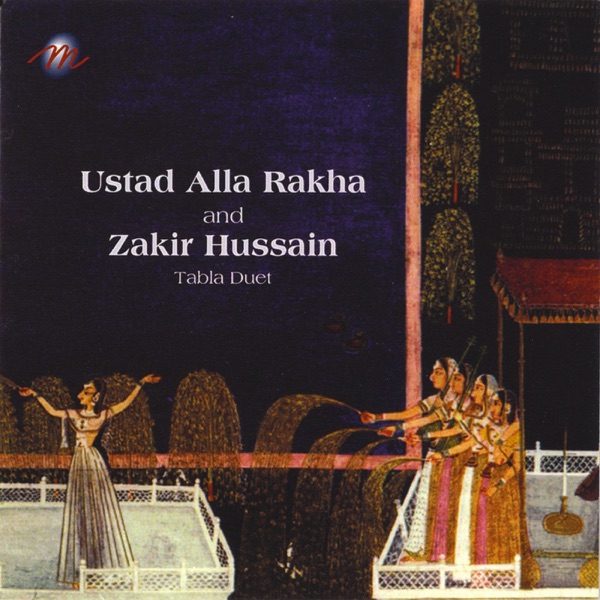
If you only know Zakir Hussain from his work with John McLaughlin in Shakti, you already know the important part: this guy could keep pace with a jazz-trained guitarist playing in impossible time signatures and make it look like nothing. He wasn't a jazz musician who learned tabla as a gimmick. He was a classical tabla player, trained from childhood by his father Alla Rakha, who happened to be curious enough and good enough to walk into jazz rooms and hold his own.
The Shakti years with McLaughlin in the 1970s are the obvious entry point, and they hold up. Shakti (1976) sounds like nothing else from that decade — Carnatic violin, South Indian percussion, and an electric guitarist from Yorkshire all speaking a shared rhythmic grammar that Hussain basically built on the spot. But the real trick wasn't fusion for its own sake. It was that Hussain's tabla playing already contained the kind of rhythmic complexity jazz drummers spend careers chasing — odd groupings, cross-rhythms, call and response — so when he sat across from a jazz musician, it wasn't a culture clash, it was two people who already spoke the same dialect discovering they'd never met.
He kept doing this for decades, with Herbie Hancock, with Mickey Hart on the Planet Drum records, with Charles Lloyd later in life. None of it felt like a novelty act or a world-music box to check. His playing was too precise for that, too obviously the product of actual discipline rather than vibe. You'd hear him in a quartet and realize the tabla wasn't decoration — it was carrying the harmonic and rhythmic weight that a drum kit usually would, just with more vocabulary.
What I'd tell a friend before pressing play: don't expect drum solos in the rock sense. Expect conversation. Hussain's tabla parts breathe and argue and resolve like a horn player trading fours, except the instrument is two small drums and the ideas are coming from a tradition thousands of years older than jazz itself. He died in December 2024, and the jazz world lost someone who never needed to call himself a jazz musician to belong in the conversation.