Drumming as Open Space
If you only know free jazz drumming as a wall of sound, Whit Dickey will surprise you. He came up through the David S. Ware Quartet in the 1990s, sitting alongside Matthew Shipp and William Parker in a band that could howl when it needed to but mostly built its power through tension and silence. Dickey's job in that group wasn't to fill every bar — it was to shape the air around the horn, to know when to push and when to just let David S. Ware breathe. That's a harder skill than it sounds, and it's the thing that separates drummers who serve the music from drummers who just play fast.
Listen to Flight of i (1991), the record that introduced that quartet to a wider audience, and you can hear it: Dickey's cymbal work floats rather than crashes, his accents land like punctuation rather than exclamation points. He's not trying to out-shout anybody. There's a real lineage here back to drummers like Sunny Murray and Milford Graves, who treated the kit as a coloring instrument rather than a metronome, but Dickey has his own temperament — patient, a little austere, never showing off for its own sake.
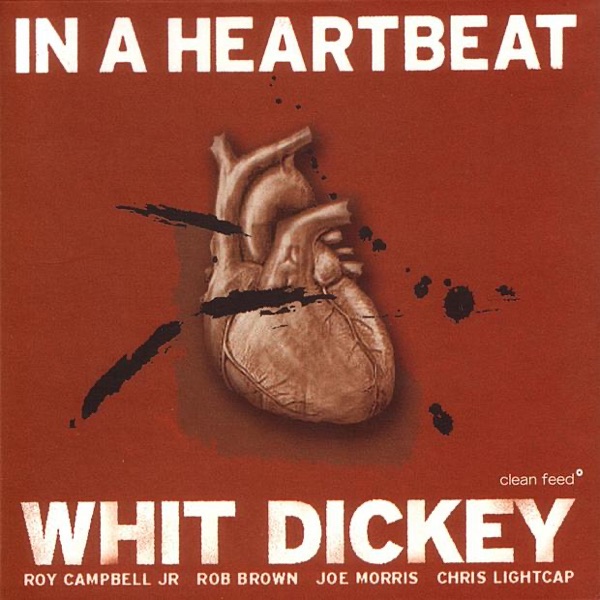
After the Ware years, Dickey built a body of work under his own name that's worth seeking out, even if it's never going to top anybody's best-seller list. Records like Big Top (1996) and Transonic (1998) on AUM Fidelity put him in the leader's chair with players like Rob Brown and Matthew Shipp, and you can hear him stretching the rhythmic ideas he'd been quietly developing as a sideman. He's not a drummer who needs a huge band around him — some of his most interesting work is in stripped-down trios where there's nowhere to hide and nothing to do but listen hard to the other two people in the room.
More recently he's kept the music alive on his own terms by running Tao Forms, a label built around long-form improvisation with younger players like Nate Wooley and Brandon Lopez, including his own Vessel in Orbit (2021). It's not a nostalgia project — it's a guy who came up in one golden era of free jazz making sure the next one has somewhere to put its records out. That's not a small thing in a music that's always been underserved by the industry around it.
Dickey isn't a drummer who's going to convert anybody who doesn't already have patience for open, exploratory jazz. But if you're the kind of listener who likes space as much as density, who wants to hear what happens when a rhythm section trusts silence, he's one of the best examples of that approach working. He never needed to be the loudest person in the room to be essential to it.