Where do you listen?
Choose your streaming service
inside the sleeve
Loading…
inside the sleeveITS
⌕
Read About
Tenor Saxophone · USA · Free Jazz

Albert
Ayler

Start here Spiritual Unity (1965) →
1936 - 1970, Cleveland, USA

Albert Ayler didn't just play outside the changes — he seemed to come from a completely different tradition, one rooted in marching bands, folk hymns, and something older than jazz itself. His tenor saxophone sound was enormous and raw, closer to a human cry than any instrument most listeners had heard. He made only a handful of records before his death at 34, but they rewired what a lot of people thought music could do.

Free JazzAvant-Garde JazzSpiritual Jazz
Albert Ayler

Bells, Hymns, and Pure Noise

Ayler grew up in Cleveland playing in church and in rhythm and blues bands, and that foundation never left him. When he arrived at free jazz, he didn't arrive through bebop the way most of his peers did. He came in sideways, through military service in Europe and long nights playing with musicians in Scandinavia who had no stake in New York conventions. By the time he recorded Spiritual Unity (1964) for ESP-Disk in a single afternoon session with Gary Peacock on bass and Sunny Murray on drums, he had something nobody else had — a vocabulary built from nursery rhymes and revival meetings rather than chord substitutions.

Spiritual Unity (1964) is the place to start, and it's genuinely strange in the best way. Murray plays the drums like weather, not like time — there's no backbeat to grab onto, just pressure and release. Peacock is somewhere between anchoring the thing and dissolving into it. And Ayler is out front playing these huge, lurching melodies that feel both ancient and completely alien. The tune "Ghosts" comes back on that record in two versions, and listening to them back to back tells you everything about how Ayler thought: the theme is almost childlike, but what he does with it is ferocious.

His older brother Donald Ayler played trumpet alongside him on several records, and that relationship mattered. Albums like Bells (1965) and Spirits Rejoice (1965) have a processional quality — they actually do sound like bands marching down a street, but a street in some city that doesn't quite exist. John Coltrane was paying close attention. The two men were close in Coltrane's final years, and Coltrane's late work, especially Ascension (1966), shows that Ayler had gotten under his skin in a serious way.

The late records are where things get complicated for a lot of Ayler listeners. His albums for Impulse! in the late 1960s introduced electric instruments, rock grooves, and sung vocals — his then-partner Mary Parks wrote and sang on several tracks. New Grass (1969) landed like a provocation, and plenty of people at the time thought he had lost the plot. Looking back, it reads more like genuine restlessness than commercial sellout, though the results are uneven. He was chasing something, not settling.

Ayler's body was found in the East River in November 1970. The circumstances were never fully explained, and the mystery has attached itself to the music in ways that aren't always fair to what he actually left behind. The better approach is to go back to those early ESP records and hear a musician who genuinely didn't sound like anyone else — not because he was trying to be difficult, but because he was being completely honest about where his music came from.

Facts
BornJuly 13, 1936, Cleveland, Ohio, USA
DiedNovember 05, 1970, New York, United States
InstrumentTenor Saxophone, Alto Saxophone
Active1958 – 1970
Known forRadical free improvisation rooted in hymns, folk melody, and raw tone
Connections
Gary PeacockBassist, Spiritual Unity sessions
→
Sunny MurrayDrummer, longtime collaborator
→
John ColtraneMutual influence, New York avant-garde
→
Read more

Discography

12 records
Spiritual Unity
Spiritual Unity
1965
Goin' Home
Goin' Home
1962
My Name Is Albert Ayler
1964
Witches & Devils
Witches & Devils
1964
Spirits Rejoice
Spirits Rejoice
1965
Complete Live At Slug's Saloon
1966
Love Cry
Love Cry
1968
Love Cry (Bonus Track Edition)
1968
New Grass
New Grass
1969
Music Is The Healing Force Of The Universe
1970
Live On The Riviera
Live On The Riviera
1970
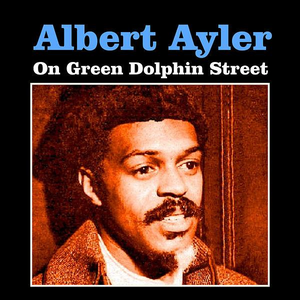
On Green Dolphin Street

Collaborations

Live on Youtube

Explore Further

Selected connections
Saxophonist, USA
Pharoah Sanders
If Ayler's spiritual intensity drew you in, Sanders takes that feeling and stretches it across long, slowly building performances — especially on his Impulse! records from the late 1960s.
Explore →
Album, 1966
Ascension – John Coltrane
Coltrane's massive collective improvisation bears Ayler's fingerprints all over it — the density, the departure from changes, the almost religious seriousness.
Explore →

Who's playing
Listen next
Recording Info
Track listing
Musicians
Further Reading
Read more

Where next?

More by this artist

Albums with the same musicians

From the same era

Similar artists

inside the sleeve
Growing
Jazz, explained without pretension.
Read · Follow the connections · Press play
Right now: 7,100+ albums · 440+ artists
Start here
New to jazz? These artists are good places to start.
Loading…
Explore
Nine records worth getting lost in.
Born today
Album of the day
A landmark record, every day.
Read
  • Loading…
Article archive →
Recently added
Purpose
Inside the Sleeve is your companion on a journey through jazz — not a textbook, but something closer to a knowledgeable friend sitting next to you while you listen. Read about an artist, press play, follow a connection, discover an album you didn't know you needed.
Suggestions
Read

Articles

Essays, guides, and lists about jazz and the records that matter.

Loading…

Genre

Key Artists
Further Reading

Essential Albums

Related Genres

In This Genre

About

Inside the Sleeve

Work in progress

Inside the Sleeve grows continuously — new artists and albums are added, essays refined, as visitors explore and our editors follow up on what they find. Content, features, and design are still evolving; use the Report error button on any page to flag something that seems off.

Content

Every artist, album, and release date on Inside the Sleeve is real — verified against trusted sources including MusicBrainz and Wikipedia. We don't invent discographies or fabricate records. AI compiles that verified information into readable prose — essays on artists, albums, and the music itself. We can't manually review every essay before publishing, but every reported error is checked by a human editor.

Inside the Sleeve is not a review site. We're not here to rate or rank — we're here to guide you in. Where an album stands out, we'll say so. Where an artist changed everything, you'll know why. But we won't tear anything down. Jazz history is complex and sources sometimes disagree — if you spot something that seems off, please report it.

Streaming

Inside the Sleeve links to Spotify and Apple Music so you can listen while you read. These are not affiliate links. For Spotify, links open a search on open.spotify.com — we do not have direct links to specific recordings. For Apple Music, direct links are used where available, otherwise a search is opened.

Your choice of streaming service is stored locally in your browser only. It is never sent to our servers.

We're working on deeper Spotify integration, including direct links to specific recordings.

Privacy

Inside the Sleeve does not collect personal data and does not use cookies. We count page visits anonymously using a self-hosted analytics tool — no personal identifiers are stored, and the data never leaves our own server. The only preference stored on your device is your streaming service choice, saved locally in your browser and never transmitted.

When you submit a suggestion or error report, the text you write is stored in our database. No name or email is required or collected unless you choose to provide one.

Third-party services

Spotify and Apple Music are independent services with their own terms of use and privacy policies. Inside the Sleeve is not affiliated with or endorsed by either company.

Support

Inside the Sleeve is free and ad-free. If you enjoy it, a coffee helps cover server costs and keeps the project going.

Amazon

Some book recommendations on Inside the Sleeve link to Amazon. Buying through these links costs you nothing extra — but Amazon pays us a small commission, which goes directly towards keeping the site running. It's a simple way to support the project if you were going to buy the book anyway.

As an Amazon Associate, Inside the Sleeve earns from qualifying purchases.

Questions or feedback? Use the suggestion box on the front page.

Inside the Sleeve — A guide for those who want to go beyond the obvious About & Privacy