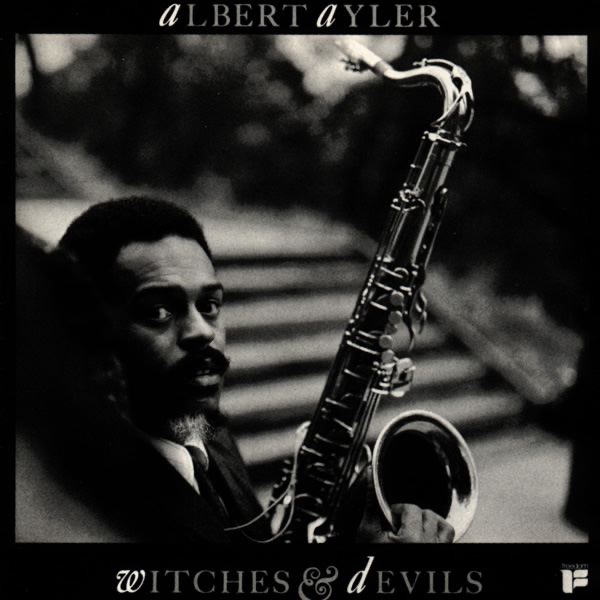
1966 · Album
Complete Live At Slug's Saloon
Recorded 1964-1965 at Slug's Saloon, New York · ESP-Disk · Produced by Bernard Stollman

When the Spiritual Tenor Found Its Voice
Ayler's tone cuts through the room like nothing else in jazz, urgent and alive.
Slug's Saloon in the Lower East Side was the kind of place where Albert Ayler could be himself without compromise. These recordings capture him in that space, playing with the freedom and intensity that defined his music. His tenor saxophone doesn't sound like other tenors—the tone is wide open, almost vocal in its expressiveness, bending notes in ways that made traditionalists uncomfortable but felt completely natural to anyone listening. The spirituals he loved kept turning up in his solos, not as quotations but as the actual emotional DNA of what he was playing.
This live document is essential to understanding Ayler's work because it strips away any studio polish and shows you what he sounded like in his element. The immediacy hits you right away. There's no distance between the musician and the listener. His playing could sound raw or angelic depending on the tune, and often it did both things at once. The band seems locked into whatever Ayler was feeling in the moment, responding to his intensity with their own commitment. Unlike some of his studio recordings, these performances let you hear him as people in that room actually experienced him, night after night.
If you know Ayler only from his earlier New York sessions or his later work, this live material shows you the middle ground where his powers felt most concentrated. It's not his only important document, but it's the one where you can most clearly hear why people who were there considered him revolutionary. This is the sound of someone playing exactly what he needed to play, nothing filtered or second-guessed.