2001 · Album
8 O’Clock: Two Improvisations
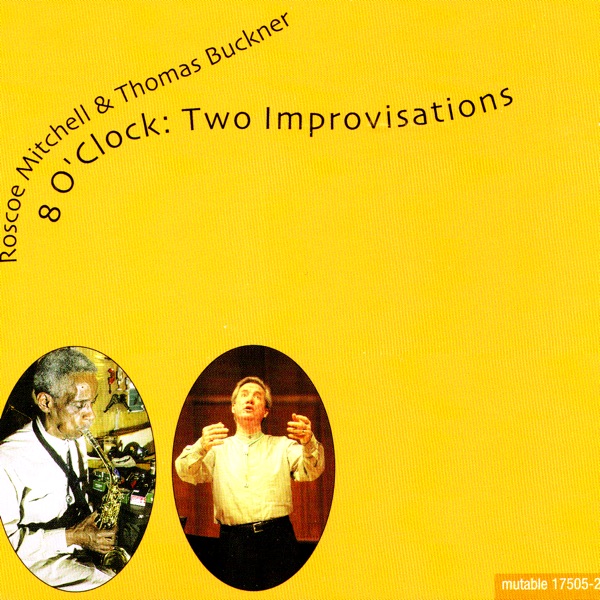
Recorded 2000 · Mutable Music · Personnel: Roscoe Mitchell (alto saxophone, tenor saxophone); Thomas Buckner (voice)
Mitchell and Buckner in Sparse Dialogue
Two voices finding space in silence, trading phrases across empty air with patience and purpose.
By 2000, Roscoe Mitchell had spent four decades building his language as an improviser—from the Art Ensemble of Chicago through decades of solo and ensemble work. This album finds him late in his powers but not diminished, paired with vocalist Thomas Buckner in a stripped-down setting that strips away everything but listening. The two improvisations that make up the album are exactly that: unscored conversations between saxophone and voice, neither leading, both responding. Mitchell plays alto and tenor; Buckner uses his voice as an instrument, not singing words but exploring tone, texture, and breath. There is nothing here that resembles song or traditional jazz language. Instead it's a study in how two players can share space without competing for it, how silence becomes as important as sound. The Penguin Guide to Jazz Recordings gave it three stars, acknowledging its merit while perhaps finding it too austere for wider appeal. AllMusic reviewer François Couture found something more generous in the encounter, recognizing the restraint as strength rather than limitation. For listeners accustomed to Mitchell's ensemble work or his saxophone solos with rhythm sections, this will feel deliberately spare—almost monastic. It's not a return to anything, nor a departure from his principles, but rather a logical extension of them into a space where two improvising voices can hear each other completely.