Where do you listen?
Choose your streaming service
inside the sleeve
Loading…
inside the sleeveITS
⌕
Read About
Drummer/Percussion - England - Free Jazz

Paul
Lytton

1947 - , England

Paul Lytton never sounded like a drummer trying to swing — he sounded like someone building a radio out of scrap metal in real time. For half a century he's been one of the quiet engines of European free improvisation, half percussionist, half inventor, rarely interested in keeping time the way anyone taught him to.

Free JazzAvant-Garde Jazz
♫

The Drummer Who Built His Own Kit

Paul Lytton came up in London in the late 1960s, right when a handful of British musicians decided jazz didn't have to sound like American jazz at all. He wasn't trained in the conservatory sense — he figured things out by doing them, which is maybe why his playing never settled into anything resembling a standard drum vocabulary. He bolted homemade electronics and scavenged bits of hardware onto his kit, so a Lytton performance could include crackles, hums, and scraping metal alongside actual drums and cymbals. It wasn't a gimmick. It was just how he heard rhythm — as texture and noise as much as pulse.

The relationship that defines his career is with Evan Parker (saxophone). They started playing duets around 1969 and never really stopped, decades of two guys in a room listening so closely to each other that the music becomes a kind of argument and agreement happening at once. Records like Collective Calls (Urban) (Two Microphones) (1972) capture that early partnership — sparse, strange, patient in a way that free jazz from America at the same moment usually wasn't. Where a lot of American free jazz drummers were pushing energy and volume, Lytton was often doing the opposite: pulling back, leaving gaps, making you lean in.

He became the third leg of one of the most important trios in European improvised music once Barry Guy (bass) joined the picture. The Parker/Guy/Lytton trio worked together on and off for decades, and if you want to understand what British free improvisation actually sounds like at its most developed, that's the group to hear. Lytton in that context isn't a timekeeper — he's more like a weather system, shifting the atmosphere under the other two without ever locking into something you could tap your foot to.

He also worked outside that circle, playing with Peter Brötzmann, with Anthony Braxton, and later with younger improvisers who grew up admiring exactly the records he'd made decades earlier. He never became a household name, even within jazz, and that's fine — he wasn't chasing that. What he did was help build an entire alternative vocabulary for the drum kit, one where noise, silence, and invented instruments count as much as rhythm. If you come to him expecting grooves, you'll be lost. Come expecting a conversation between a drummer and his own homemade machines, and it starts to make sense.
Facts
Born1947, England
InstrumentDrums, percussion, self-built electronics
ActiveLate 1960s - present
Known forLongtime duo and trio partnership with Evan Parker and Barry Guy, pioneering use of homemade percussion and electronics in European free improvisation
Connections
Evan ParkerLongtime duo and trio partner, London
→
Barry GuyTrio partner, London
→
Peter BrötzmannCollaborator, European free jazz circuit
→
Read more

Discography

22 records
♫
The Inclined Stick
1979
♫
Moinho da asneira / À cerca da bela vista á graça
1980
♫
Death Is Our Eternal Friend
1983
♫
Ellispontos
1986
♫
Wo der Kopf sitzt
1987
♫
Two Octobers (1972-1975)
1996
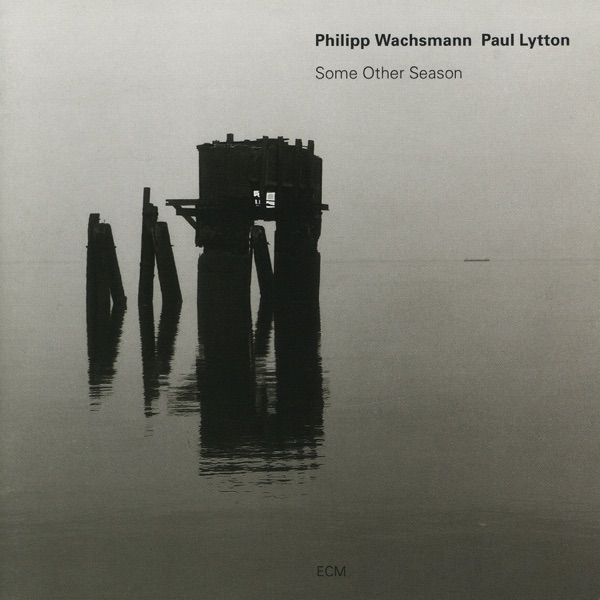
Some Other Season
Some Other Season
1999
♫
Waterloo 1985
1999
♫
English Suites
2000
♫
Vanishing Pictures
2001
Ithaca
Ithaca
2005
♫
Free Zone Appleby 2004
2005
♫
CINC
2006
♫
Seven Storey Mountain
2009
♫
The Nows
2012
♫
Nine Ways to Read a Bridge
2014
♫
Imagined Time
2016
♫
Deep Memory
2016
♫
Collective Calls (Revisited) (Jubilee)
2020
♫
Known / Unknown
2020
♫
Do They Do Those in Red?
2020
♫
Loose Connections
2024

Collaborations

Live on Youtube

Explore Further

Selected connections
Saxophonist, England
Evan Parker
Lytton's closest musical partner for over fifty years — start with their duo recordings to hear the collaboration that shaped them both.
Explore →
Album, 1972
Collective Calls (Urban) (Two Microphones) (1972)
An early, austere document of the Parker/Lytton duo and a good entry point into Lytton's homemade sound world.
Explore →
Bassist, England
Barry Guy
The third member of the Parker/Guy/Lytton trio, essential listening for understanding British free improvisation at full strength.
Explore →

Who's playing
Listen next
Recording Info
Track listing
Musicians
Further Reading
Read more

Where next?

More by this artist

Albums with the same musicians

From the same era

Similar artists

inside the sleeve
Growing
Jazz, explained without pretension.
Read · Follow the connections · Press play
Right now: 7,100+ albums · 440+ artists
Start here
New to jazz? These artists are good places to start.
Loading…
Explore
Nine records worth getting lost in.
Born today
Album of the day
A landmark record, every day.
Read
  • Loading…
Article archive →
Recently added
Purpose
Inside the Sleeve is your companion on a journey through jazz — not a textbook, but something closer to a knowledgeable friend sitting next to you while you listen. Read about an artist, press play, follow a connection, discover an album you didn't know you needed.
Suggestions
Read

Articles

Essays, guides, and lists about jazz and the records that matter.

Loading…

Genre

Key Artists
Further Reading

Essential Albums

Related Genres

In This Genre

About

Inside the Sleeve

Work in progress

Inside the Sleeve grows continuously — new artists and albums are added, essays refined, as visitors explore and our editors follow up on what they find. Content, features, and design are still evolving; use the Report error button on any page to flag something that seems off.

Content

Every artist, album, and release date on Inside the Sleeve is real — verified against trusted sources including MusicBrainz and Wikipedia. We don't invent discographies or fabricate records. AI compiles that verified information into readable prose — essays on artists, albums, and the music itself. We can't manually review every essay before publishing, but every reported error is checked by a human editor.

Inside the Sleeve is not a review site. We're not here to rate or rank — we're here to guide you in. Where an album stands out, we'll say so. Where an artist changed everything, you'll know why. But we won't tear anything down. Jazz history is complex and sources sometimes disagree — if you spot something that seems off, please report it.

Streaming

Inside the Sleeve links to Spotify and Apple Music so you can listen while you read. These are not affiliate links. For Spotify, links open a search on open.spotify.com — we do not have direct links to specific recordings. For Apple Music, direct links are used where available, otherwise a search is opened.

Your choice of streaming service is stored locally in your browser only. It is never sent to our servers.

We're working on deeper Spotify integration, including direct links to specific recordings.

Privacy

Inside the Sleeve does not collect personal data and does not use cookies. We count page visits anonymously using a self-hosted analytics tool — no personal identifiers are stored, and the data never leaves our own server. The only preference stored on your device is your streaming service choice, saved locally in your browser and never transmitted.

When you submit a suggestion or error report, the text you write is stored in our database. No name or email is required or collected unless you choose to provide one.

Third-party services

Spotify and Apple Music are independent services with their own terms of use and privacy policies. Inside the Sleeve is not affiliated with or endorsed by either company.

Support

Inside the Sleeve is free and ad-free. If you enjoy it, a coffee helps cover server costs and keeps the project going.

Amazon

Some book recommendations on Inside the Sleeve link to Amazon. Buying through these links costs you nothing extra — but Amazon pays us a small commission, which goes directly towards keeping the site running. It's a simple way to support the project if you were going to buy the book anyway.

As an Amazon Associate, Inside the Sleeve earns from qualifying purchases.

Questions or feedback? Use the suggestion box on the front page.

Inside the Sleeve — A guide for those who want to go beyond the obvious About & Privacy