Where do you listen?
Choose your streaming service
inside the sleeve
Loading…
inside the sleeveITS
⌕
Read About
Tenor Saxophone - USA - Free Jazz / Post-Bop

Dewey
Redman

Start here Tarik (1970) →
1931 - 2006, USA

Dewey Redman came up the hard way, spending his thirties playing Texas roadhouses while his peers were already making records in New York. When he finally arrived on the downtown scene, he brought something that hadn't quite been heard before — a raw, honking sound rooted in the blues that fit perfectly inside the free jazz world without ever losing its earthiness.

Free JazzPost-BopAvant-Garde JazzHard Bop
Dewey Redman

Rougher Than the Rest

Dewey Redman grew up in Fort Worth, Texas, where the blues and rhythm-and-blues were the dominant languages. He came to jazz late by the standards of his generation — he didn't relocate to New York and start making serious noise until his late thirties. But that detour through the Texas music world gave him something a lot of his avant-garde contemporaries were missing: a real connection to the gut-level, church-and-juke-joint side of African American music. When he played free, you could still hear where he came from.

His most famous association is with Ornette Coleman, his longtime friend from Fort Worth who had already revolutionized jazz by the time Dewey arrived in New York. Redman joined Coleman's group and contributed to records like Science Fiction (1971), where his big, slightly raspy tone added a different texture from Ornette's alto — earthier, more hard-bop adjacent. The two had a chemistry built on decades of friendship, and it showed. Redman wasn't just a sideman filling a chair; he was a genuine creative partner.

He also had a long and productive relationship with Keith Jarrett, playing in Jarrett's American quartet through much of the 1970s alongside Charlie Haden and Paul Motian. That band was one of the more interesting groups of the era — looser than ECM's Nordic sound, bluesier than most of what was being called post-bop, and genuinely exploratory without the sometimes airless quality that free jazz could slip into. Albums like Expectations (1972) show Redman holding his own in a group that could easily have been dominated by Jarrett's piano.

As a leader, Redman made records that deserve more attention than they typically get. His work for the Impulse! label in the early 1970s — particularly Tarik (1969) and Electric Bebop Band (1974) — shows him thinking through his own identity rather than just applying free jazz vocabulary. The musette he sometimes played alongside his tenor was an unusual choice and gave some of his records an almost folk-ish quality, something a little strange and personal.

His son Joshua Redman became one of the most celebrated saxophonists of the 1990s, which inevitably means Dewey gets framed as a footnote in someone else's story. That's worth pushing back on. Dewey Redman had a sound — heavy, slightly gruff, always blues-informed — that nobody else quite replicated. If you're listening to Ornette Coleman's electric-era recordings and wondering who that other tenor is, or if you want to understand what the Keith Jarrett quartet actually sounded like on a good night, Dewey Redman is where you go.

Facts
BornMay 17, 1931, Fort Worth, Texas, USA
DiedAugust 2, 2006, New York, USA
InstrumentTenor Saxophone, Musette
Active1950s – 2006
Known forOrnette Coleman's groups, Keith Jarrett American Quartet, Texas-rooted free jazz tenor sound
Connections
Ornette ColemanBandleader & Collaborator, New York
→
Keith JarrettBandleader, American Quartet
→
Charlie HadenQuartet Bandmate, New York
→
Joshua RedmanSon & Saxophonist, New York
→
Read more

Discography

21 records
Tarik
Tarik
1970
The Ear of the Behearer
1973
♫
Coincide
1975
Musics
Musics
1979
♫
Soundsigns
1981
Red and Black in Willisau
1985
♫
Split Image
1985
Choices
Choices
1992
School Work
School Work
1993
Horn Riffs for DJ’s Vol. 3
1993
♫
Times for Peace
1994
African Venus
African Venus
1994
♫
A Tribute to Ornette Coleman
1996
Mostly Live
Mostly Live
1996
In London
In London
1997
Spirituals & Dedications
2001
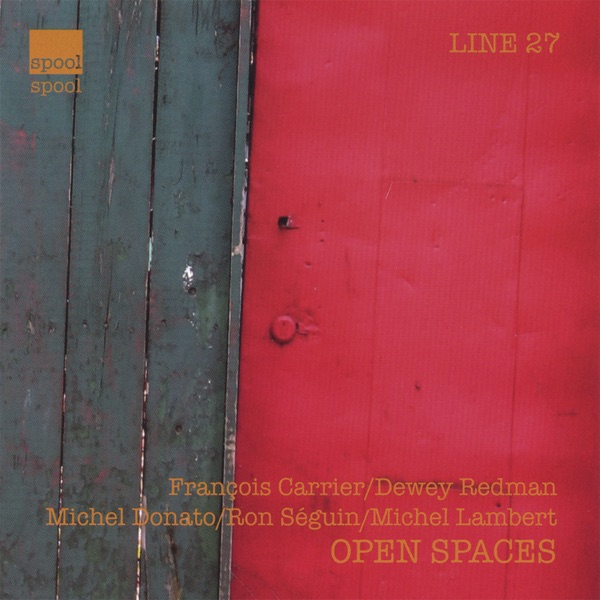
Open Spaces
Open Spaces
2006
The Key of Life
The Key of Life
2009
Look for the Other Black Star
2012
Dewey Redman Live
Dewey Redman Live
2013
Pillars & Columns
Pillars & Columns
2020

Collaborations

Live on Youtube

Explore Further

Selected connections
Saxophonist, USA
Ornette Coleman
If Dewey's free side intrigues you, go straight to the source — Coleman's Atlantic recordings are where that whole language was invented, and hearing them together puts Redman's contribution in sharp relief.
Explore →
Album, 1972
Expectations
The Keith Jarrett American Quartet at full stretch — Redman is a central voice here, and the record shows just how different this band was from everything else happening in jazz at the time.
Explore →
Saxophonist, USA
Joshua Redman
Hearing Joshua alongside Dewey's recordings is genuinely interesting — the family resemblance in tone is real, but Joshua went a more mainstream post-bop direction, which makes the contrast instructive.
Explore →

Who's playing
Listen next
Recording Info
Track listing
Musicians
Further Reading
Read more

Where next?

More by this artist

Albums with the same musicians

From the same era

Similar artists

inside the sleeve
Growing
Jazz, explained without pretension.
Read · Follow the connections · Press play
Right now: 7,100+ albums · 440+ artists
Start here
New to jazz? These artists are good places to start.
Loading…
Explore
Nine records worth getting lost in.
Born today
Album of the day
A landmark record, every day.
Read
  • Loading…
Article archive →
Recently added
Purpose
Inside the Sleeve is your companion on a journey through jazz — not a textbook, but something closer to a knowledgeable friend sitting next to you while you listen. Read about an artist, press play, follow a connection, discover an album you didn't know you needed.
Suggestions
Read

Articles

Essays, guides, and lists about jazz and the records that matter.

Loading…

Genre

Key Artists
Further Reading

Essential Albums

Related Genres

In This Genre

About

Inside the Sleeve

Work in progress

Inside the Sleeve grows continuously — new artists and albums are added, essays refined, as visitors explore and our editors follow up on what they find. Content, features, and design are still evolving; use the Report error button on any page to flag something that seems off.

Content

Every artist, album, and release date on Inside the Sleeve is real — verified against trusted sources including MusicBrainz and Wikipedia. We don't invent discographies or fabricate records. AI compiles that verified information into readable prose — essays on artists, albums, and the music itself. We can't manually review every essay before publishing, but every reported error is checked by a human editor.

Inside the Sleeve is not a review site. We're not here to rate or rank — we're here to guide you in. Where an album stands out, we'll say so. Where an artist changed everything, you'll know why. But we won't tear anything down. Jazz history is complex and sources sometimes disagree — if you spot something that seems off, please report it.

Streaming

Inside the Sleeve links to Spotify and Apple Music so you can listen while you read. These are not affiliate links. For Spotify, links open a search on open.spotify.com — we do not have direct links to specific recordings. For Apple Music, direct links are used where available, otherwise a search is opened.

Your choice of streaming service is stored locally in your browser only. It is never sent to our servers.

We're working on deeper Spotify integration, including direct links to specific recordings.

Privacy

Inside the Sleeve does not collect personal data and does not use cookies. We count page visits anonymously using a self-hosted analytics tool — no personal identifiers are stored, and the data never leaves our own server. The only preference stored on your device is your streaming service choice, saved locally in your browser and never transmitted.

When you submit a suggestion or error report, the text you write is stored in our database. No name or email is required or collected unless you choose to provide one.

Third-party services

Spotify and Apple Music are independent services with their own terms of use and privacy policies. Inside the Sleeve is not affiliated with or endorsed by either company.

Support

Inside the Sleeve is free and ad-free. If you enjoy it, a coffee helps cover server costs and keeps the project going.

Amazon

Some book recommendations on Inside the Sleeve link to Amazon. Buying through these links costs you nothing extra — but Amazon pays us a small commission, which goes directly towards keeping the site running. It's a simple way to support the project if you were going to buy the book anyway.

As an Amazon Associate, Inside the Sleeve earns from qualifying purchases.

Questions or feedback? Use the suggestion box on the front page.

Inside the Sleeve — A guide for those who want to go beyond the obvious About & Privacy