1985 · Album
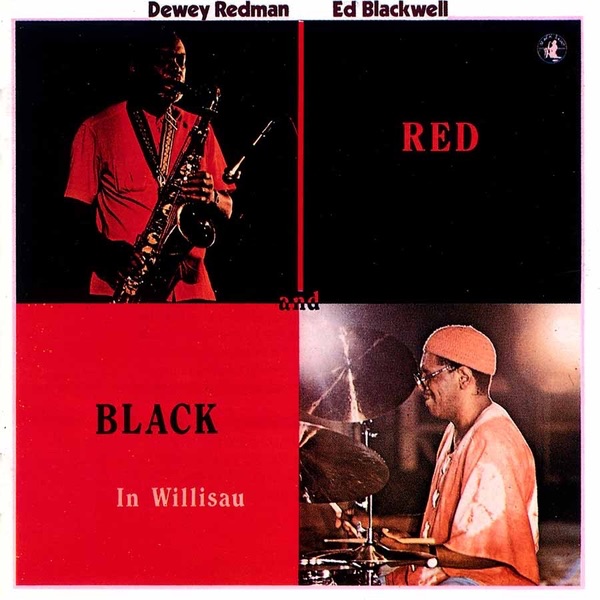
Red and Black in Willisau
Recorded Willisau Jazz Festival, 1980 · Black Saint · Format: Live duets
Two Voices, No Net, Just Pure Air
Redman's huge sound and Blackwell's colorful rhythms create something that works despite missing the usual harmonic anchors.
The first thing that hits you is the absence. No bass, no piano, no chords — just saxophone and drums in conversation, and that emptiness becomes the album's greatest strength. Dewey Redman's tenor is enormous and warm, sometimes breathy and intimate, sometimes cutting straight through the room. Ed Blackwell doesn't just keep time; his drums are conversational too, rolling and shifting beneath Redman's lines, creating space rather than filling it. This is what happens when two musicians trust each other completely.
Recorded live at the Willisau Jazz Festival in 1980, these duets have the feel of two old friends in a room, testing ideas, listening hard, never quite settling into groove or predictability. Redman plays long, searching phrases that sometimes feel like he's asking questions. Blackwell answers with textures — brushes, mallets, the full range of the kit used almost like a second horn. The recording captures the intimacy without sacrificing presence; you can hear the space between them.
This is not background music or a clever exercise in reduction. It's two master musicians working at the height of their powers, proving that you don't need harmonic instruments to say something real. The closest reference point in Redman's catalog might be his earlier duo work, but this album stands alone — spare, searching, and entirely unafraid of silence.
Who's playing
Ed Blackwelldrums
Dewey Redmanwoodwind
Where next?
More by Dewey Redman
All 21 albums →

The musicians on this record
Their own records, close in time