The Bassist Who Left Early
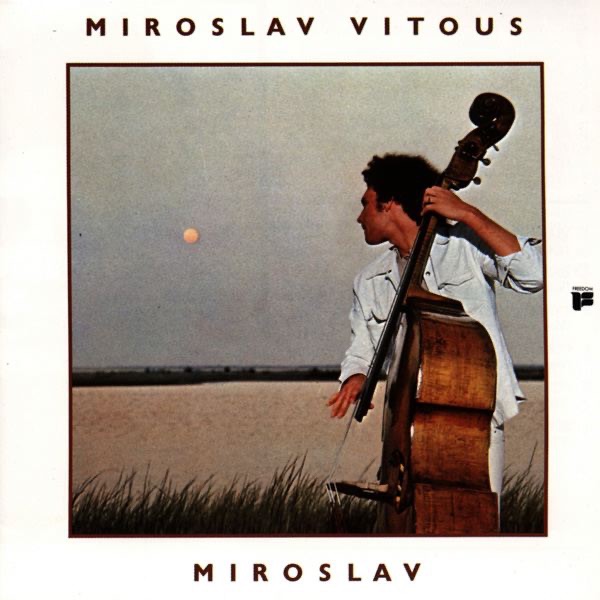
Vitous grew up in Prague studying violin and piano before switching to double bass, and that classical grounding never left him — you can hear it in how cleanly he shapes a phrase, how little he relies on cliché to fill space. He came to the U.S. in the late 1960s, landed at Berklee, and within a couple of years was recording with Miles Davis (1969)-adjacent players and cutting his own ECM debut, Infinite Search (1969), a record that already sounds like someone impatient with the boundaries of straight-ahead jazz.
Then came Weather Report. Vitous co-founded the band with Joe Zawinul and Wayne Shorter in 1970, and for its first few albums he was as much a compositional voice as a bassist — check the interplay on Weather Report (1971) if you want to hear a rhythm section that's actually improvising as a unit rather than just keeping time. He left the band by the mid-1970s, right around the time it started tilting harder toward Zawinul's vision and away from the collective, open-ended sound Vitous had helped build. People sometimes frame this as him missing the commercial payoff of later Weather Report. Maybe. But it also tracks with everything else about him — he's never been an artist who sticks around once a project stops interesting him.
After Weather Report he went back to being a bandleader on his own terms, recording a run of ECM albums through the 1970s and 80s like Journey's End (1982) and Emergence (1985), often using the studio itself as an instrument, building layered bass textures and working with synthesizers and orchestration in ways that feel less like fusion-for-the-charts and more like someone quietly obsessed with tone and space. He also spent years teaching, including a long stint at the New England Conservatory, shaping younger players rather than chasing the road.
What makes Vitous worth seeking out isn't a single signature lick or a hit record — it's the sense that he treated the double bass as a lead voice decades before that was standard practice in jazz, and did it with a composer's patience rather than a virtuoso's showmanship. If you only know him from Weather Report's radio-friendly later years, go back to the early records and hear what he actually sounded like before the band became something else.