Cinema in the Dark: Vitouš Honors a Filmmaker
Three musicians in a room, translating Pasolini's fury and poetry into sound without a single word.
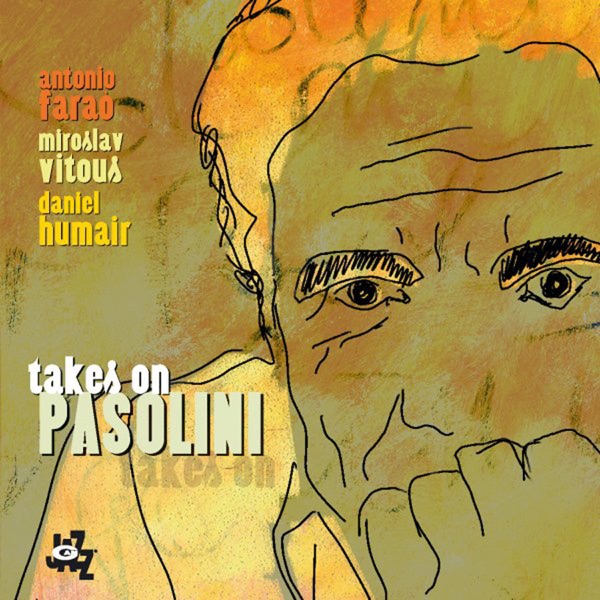
In 2005, Miroslav Vitouš entered the studio with Antonio Faraò on piano and Daniel Humair on drums to make something unusual: a jazz album built entirely around the life and work of Pier Paolo Pasolini, the Italian filmmaker and poet murdered in 1975. This was not a commissioned soundtrack or a thematic gimmick. Vitouš had long been drawn to cinema and visual art as compositional fuel, and Pasolini's combination of political rage, sensuality, and formal experimentation spoke to something in him. The trio worked in real time, creating pieces that reflected different phases of Pasolini's life and obsessions — his films, his novels, his activism, his violent death.
What emerges is sparse and deliberately unglamorous. Vitouš's bass sits low and probing, often playing the role of interrogator rather than anchor. Faraò's piano moves between stark chords and long silences, never rushing to fill space. Humair's approach is restrained, favoring texture over assertion. There is nothing here that sounds like Weather Report or Vitouš's earlier fusion work. Instead, the album feels like chamber jazz refracted through European art cinema — intimate, sometimes uncomfortable, never decorative. The pieces build slowly, often in minor keys, with an underlying tension that never quite resolves.
This is a late-career work by an artist who had already done nearly everything worth doing in jazz. It is not for listeners seeking warmth or groove. But for anyone interested in how a working musician processes ideas beyond music — how cinema and poetry can actually shape the sound a bassist and pianist make together — it remains one of Vitouš's most singular statements.
Who's playing
Where next?
More by Miroslav Vitous
All 29 albums →


The musicians on this record
Their own records, close in time


