1973 · Album
Hymn of the Seventh Galaxy
Recorded 1973 · Columbia Records · Produced by Chick Corea, George Butler
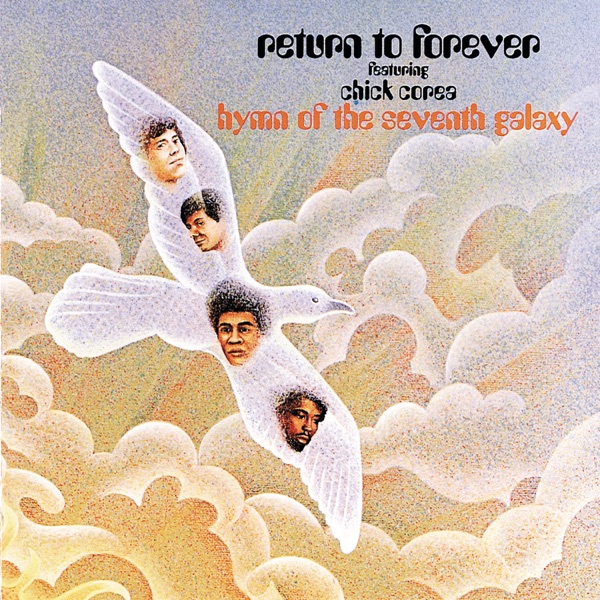
Fusion's Spiritual Side: A Cosmic Journey
Return to Forever proves that electric jazz fusion could be both technically dazzling and genuinely moving.
By the time Hymn of the Seventh Galaxy (1973) arrived, Return to Forever had already turned heads with their debut, but Chick Corea and company weren't interested in repeating themselves. This record finds the band leaning harder into science-fiction textures and more ambitious compositional structures, though it never loses sight of melody. The real revelation here is how the group balances Corea's polyrhythmic keyboard work with Bill Connors's fluid guitar lines and Stanley Clarke's woody, melodic bass tone. Clarke in particular sounds less like a timekeeper and more like a solo voice, trading passages with the other instruments rather than just holding down patterns.
What sets this apart from Corea's other fusion projects is the emphasis on accessibility without dumbing anything down. "Dayride" and "One Gate of Freedom" have hooks you'll remember, but they're built on sophisticated chord changes that reveal something new on each listen. Lenny White's drumming propels everything forward with a lighter touch than you might expect from a fusion record—he's clearly listened to a lot of Tony Williams. The production has that early-70s warmth that digital reissues sometimes struggle to capture, so if you can track down original pressings, they're worth seeking out.
This isn't their most approachable album—that would be earlier work like Light as a Feather (1973)—but it's the one where you hear the band pushing hardest into new territory. Fans often cite this as a peak, and reasonably so. It's the sound of musicians completely in sync, technically extraordinary but never precious about it. If you've heard Return to Forever before and found them a bit too slick, this one's worth another try.
Who's playing
Where next?
More by Return to Forever
All 5 albums →


The musicians on this record

Crystal Silence 1973
Chick Corea
plays harpsichord here
plays harpsichord here
School Days 1976
Stanley Clarke
plays bass here
plays bass here

Venusian Summer 1975
Lenny White
plays percussion here
plays percussion here



