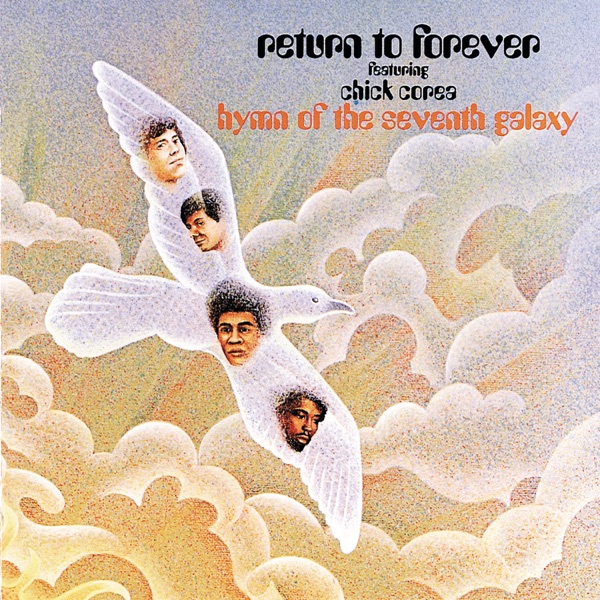
When Chick Corea Turned Up the Volume
Return to Forever started as something pretty specific: Chick Corea's answer to making jazz fusion that actually breathed. The early lineup with Stanley Clarke on bass, Joe Farrell on reeds, Flora Purim singing, and Airto Moreira on percussion made records for ECM that felt bright and spacious, heavy on Brazilian rhythms and impressionistic piano work. These weren't fusion albums trying to prove jazz could rock harder than rock. They were trying to prove fusion could be thoughtful and melodic without losing its sophistication. Flora Purim's vocals especially gave those early records an almost ethereal quality—she wasn't just singing over the band, she was part of the texture.
Then Chick Corea rebuilt the thing. Stanley Clarke stayed—he was too good to lose—but the band got louder, meaner, more electric. When Bill Connors and later Al Di Meola came through on guitar, Return to Forever started sounding like a different animal entirely. These weren't soft fusion records anymore. They had teeth. The concept albums got increasingly elaborate, the arrangements more baroque, the whole thing pulling hard toward rock dynamics. Some people will tell you this was selling out; they're wrong. It was just a different bet on what fusion could do.
What made it work was that Chick Corea didn't disappear into the band even as the band got tighter and more ambitious. He was still soloing, still leading, but never at the expense of the ensemble. Stanley Clarke became one of the few electric bass players of that era who actually mattered—not just keeping time but actually compositionally significant. And Al Di Meola came out of Return to Forever as a fully formed player, which tells you something about the band's pull. You could listen to Return to Forever and understand what late-'70s fusion could be: technical, energetic, sometimes ambitious to the point of excess, but never apologetic about any of it.
The band proved that you didn't have to choose between being a good bandleader and being a good soloist. Chick Corea managed both at once, which sounds obvious but wasn't. A lot of fusion bands worked because the leader was calling all the shots and everyone else was following. Return to Forever worked because Corea actually had players around him who could match his ideas. That's rarer than it sounds.