1975 · Album
No Mystery
Recorded 1975 · Columbia Records · Produced by Chick Corea and Lenny White

Fusion's Elegant Complexity Without the Showboating
Return to Forever proved you could be virtuosic and melodic without losing your mind in technique.
By the time Chick Corea and company made No Mystery (1975), fusion had become a crowded lane. Everyone wanted to be faster, louder, more dazzling. What makes this record stand out is its restraint. Yes, these musicians could play circles around most people—Corea on keyboards, Bill Evans on guitar, Stanley Clarke on bass, Lenny White on drums—but they actually chose not to constantly prove it. Instead they built songs that breathe, that have actual melodies you remember, that don't require a physics degree to appreciate.
The title track opens with this gorgeous, almost pastoral keyboard theme that catches you off guard for a fusion record. Then the band locks in with this funky, propulsive groove that feels earned rather than imposed. That's the whole album's approach. "Romantic Descending" lets Evans play some genuinely pretty guitar lines instead of constantly shredding. "Medieval Overture" has compositional ambition without becoming a prog-rock parody. Even when things get technically demanding—and they do—it never feels like someone showing off. Clarke's bass work sits underneath everything with this muscular grace that holds the whole thing together.
This sits at a sweet spot in Return to Forever's catalog. It's more accessible than their earlier exploratory work, more sophisticated than if they'd just leaned fully into the pop-fusion crowd-pleasing. If you're new to the band, start here. It's the best argument for why these musicians mattered beyond just being fast. They understood that virtuosity means nothing if nobody wants to listen twice.
Who's playing
Al Di Meolaguitar
Lenny Whitepercussion
Where next?
More by Return to Forever

Light as a Feather 1973

Romantic Warrior 1976
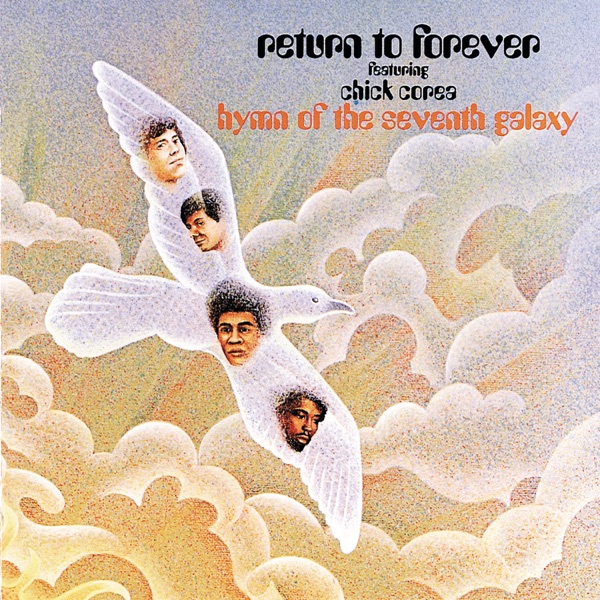
Hymn of the Seventh Galaxy 1973

Where Have I Known You Before 1974
The musicians on this record
Their own records, close in time



