1976 · Album
School Days
Released: 1976 · Chart Performance: Number 34 on Billboard 200; Number 2 on Jazz Albums chart · Album Position: Fourth solo album by Stanley Clarke
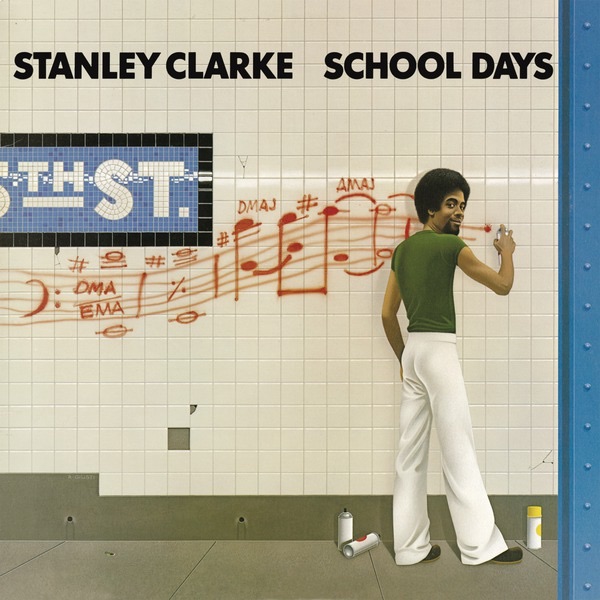
Clarke's Fourth Statement: School Days Arrives
A solid mid-career record that shows Clarke exploring electric bass texture over fusion grooves.
By 1976, Stanley Clarke had already made his mark as a bassist who could compete with the flashiest fusion players. School Days arrived as his fourth solo outing, and it landed respectably on the charts—number 34 on the Billboard 200, number 2 on the Jazz Albums chart. That commercial foothold mattered. Clarke was proving the electric bass could carry a record on its own terms, not just as a supporting voice.
The album sits in that middle ground where Clarke's technical abilities are on full display, but the material doesn't always match the ambition. Some tracks feel like they're searching for a hook that never quite arrives. Critics were divided enough that this never became a go-to entry point for new listeners. The Encyclopedia of Popular Music and Rolling Stone Album Guide both gave it low marks, which suggests this wasn't a record that converted skeptics. But that doesn't mean it's without merit—fusion records from this era often played to committed fans first and worried about universal appeal second.
What matters more is where it sits in Clarke's catalog. This wasn't his breakthrough moment, nor was it a turning point that changed what came after. It's the kind of album that fans of his early work will circle back to, not because it's his strongest record, but because it documents him at a particular moment, working through ideas about texture and rhythm that were alive in fusion at the time. If you're already listening to Clarke, this is worth hearing. If you're new to his work, start elsewhere first and return here once you know what he's capable of.
Who's playing
Stanley Clarkeelectric bass guitar
Ray Gomezelectric guitar
John McLaughlinacoustic guitar
Charles Johnsonacoustic guitar, electric guitar
David Sanciouskeyboard, organ, synthesizer
Gerry Browndrums, handbell
Steve Gadddrums
Billy Cobhamdrums
Milt Hollandcongas, percussion, triangle
Al Aaronsbrass
Marilyn Bakerstrings
Stuart Blumbergbrass
George Bohanonbrass
Thomas Buffumstrings
David Campbellstrings
Buddy Childersbrass
Rollice Dalestrings
Robert Dubowstrings
Robert Findleybrass
Janice Gowerstrings
Gary Grantbrass
Karen Jonesstrings
Dennis Karmazynstrings
Gordon Marronstrings
Lew McCrearybrass
Jack Nimitzbrass
William Petersonbrass
Dalton Smithbrass
Lya Sternstrings
Ron Straussstrings
Marcia Van Dykestrings
John Wittenbergstrings
George Dukekeyboard
Where next?
More by Stanley Clarke
All 29 albums →


The musicians on this record
Spectrum 1973
Billy Cobham
plays drums (drum set) here
plays drums (drum set) here

The Aura Will Prevail 1975
George Duke
plays keyboard here
plays keyboard here

Electric Guitarist 1978
John McLaughlin
plays acoustic guitar here
plays acoustic guitar here


