Where do you listen?
Choose your streaming service
inside the sleeve
Loading…
inside the sleeveITS
⌕
Read About
Organ - USA - Post-Bop / Avant-Garde

Larry
Young

Start here Unity (1965) →
1940 - 1978, Newark, USA

Larry Young took the Hammond B-3 organ somewhere nobody had thought to take it before — away from the gospel-drenched, blues-heavy grooves that defined the instrument and into the harmonic territory of John Coltrane. He was the organist who played like a pianist who thought like a horn player, and the results were genuinely unlike anything else. His masterpiece Unity (1965) remains one of the most quietly radical records in all of jazz.

Post-BopAvant-Garde Jazz
Larry Young

The Organ Reimagined From Within

Before Larry Young arrived, the organ in jazz had a fairly well-defined personality. It swung hard, it smelled like church, it worked a groove until the groove was fully spent. Players like Jimmy Smith had mastered that vocabulary so completely that it seemed like the instrument's natural language. Young listened to all of it, absorbed it, and then quietly set it aside. He was more interested in what John Coltrane was doing harmonically — the stacked intervals, the sheets of sound, the way a phrase could spiral outward rather than resolve neatly — and he figured out how to translate that logic onto keys and pedals.

The result, most fully realized on Unity (1965) for Blue Note, sounds like nothing else in the organ tradition. The rhythm section on that record includes Elvin Jones on drums, which tells you immediately this isn't a soul-jazz date. Young's lines don't lock into the pocket so much as float around it, searching, occasionally landing somewhere unexpected. Alongside Woody Shaw on trumpet and Joe Henderson on tenor saxophone, Young sounds like a full harmonic partner rather than a timekeeper with a left hand. The album repays close listening — it's not immediately accessible, but it opens up the more you sit with it.

Young came out of Newark and cut his teeth in the early 1960s playing R&B and straightahead gigs that gave him real command of the instrument's mechanics. That foundation matters. He was never an organist who couldn't swing — he simply chose a different center of gravity when the situation called for it. By the mid-1960s he was recording as a leader for Blue Note and appearing as a sideman on sessions that pushed hard against the edges of the mainstream.

In the late 1960s and early 1970s, Young moved toward electric jazz and funk, working with Miles Davis on sessions that would become Bitches Brew (1970) and contributing to Tony Williams's Lifetime project. That chapter of his career is sometimes treated as a footnote to his Blue Note years, but it was a genuine continuation of his restlessness — he was always chasing whatever felt unresolved. The fusion recordings are rawer and more abrasive, less immediately inviting, but they hold up if you approach them on their own terms.

He died in 1978 at 37, which means the full arc of what he might have done stays permanently open. What he left behind is a small but concentrated body of work that rewards the kind of listener willing to meet it halfway. If you've never heard the organ used as a vehicle for post-Coltrane harmonic thinking, Unity (1965) is where you start — and it may permanently alter what you think the instrument can do.

Facts
BornOctober 7, 1940, Newark, New Jersey, USA
DiedMarch 30, 1978, New York, USA
InstrumentHammond organ
ActiveLate 1950s – 1978
Known forApplying post-bop harmonic language to the jazz organ; Unity (1965)
Connections
Woody ShawBandmate, Unity sessions, New York
→
Joe HendersonBandmate, Unity sessions, New York
→
Tony WilliamsCollaborator, Lifetime, New York
→
Read more

Discography

13 records
Lawrence Of Newark
Lawrence Of Newark
1960
Testifying
Testifying
1960
Young Blues
Young Blues
1961
Groove Street
Groove Street
1962
Into Somethin'
Into Somethin'
1964
Unity
Unity
1965
Unity (The Rudy Van Gelder Edition)
1966
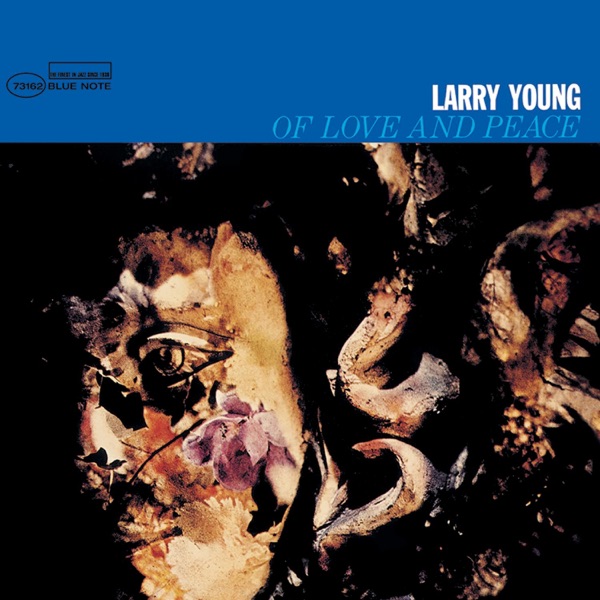
Of Love And Peace
Of Love And Peace
1966
Heaven On Earth
Heaven On Earth
1968
Mother Ship
Mother Ship
1969
larry young's fuel
larry young's fuel
1975
Forest
Forest
African Blues
African Blues

Collaborations

Live on Youtube

Explore Further

Selected connections
Organist, USA
John Patton
A Blue Note contemporary who occupied a different corner of the same organ world — harder-grooving, more grounded in soul jazz, and a useful counterpoint to Young's harmonic abstraction.
Explore →
Album, 1964
Point of Departure – Andrew Hill
Another Blue Note record from the same fertile period that shares Young's appetite for open harmonic structures and unresolved tension.
Explore →

Who's playing
Listen next
Recording Info
Track listing
Musicians
Further Reading
Read more

Where next?

More by this artist

Albums with the same musicians

From the same era

Similar artists

inside the sleeve
Growing
Jazz, explained without pretension.
Read · Follow the connections · Press play
Right now: 7,100+ albums · 440+ artists
Start here
New to jazz? These artists are good places to start.
Loading…
Explore
Nine records worth getting lost in.
Born today
Album of the day
A landmark record, every day.
Read
  • Loading…
Article archive →
Recently added
Purpose
Inside the Sleeve is your companion on a journey through jazz — not a textbook, but something closer to a knowledgeable friend sitting next to you while you listen. Read about an artist, press play, follow a connection, discover an album you didn't know you needed.
Suggestions
Read

Articles

Essays, guides, and lists about jazz and the records that matter.

Loading…

Genre

Key Artists
Further Reading

Essential Albums

Related Genres

In This Genre

About

Inside the Sleeve

Work in progress

Inside the Sleeve grows continuously — new artists and albums are added, essays refined, as visitors explore and our editors follow up on what they find. Content, features, and design are still evolving; use the Report error button on any page to flag something that seems off.

Content

Every artist, album, and release date on Inside the Sleeve is real — verified against trusted sources including MusicBrainz and Wikipedia. We don't invent discographies or fabricate records. AI compiles that verified information into readable prose — essays on artists, albums, and the music itself. We can't manually review every essay before publishing, but every reported error is checked by a human editor.

Inside the Sleeve is not a review site. We're not here to rate or rank — we're here to guide you in. Where an album stands out, we'll say so. Where an artist changed everything, you'll know why. But we won't tear anything down. Jazz history is complex and sources sometimes disagree — if you spot something that seems off, please report it.

Streaming

Inside the Sleeve links to Spotify and Apple Music so you can listen while you read. These are not affiliate links. For Spotify, links open a search on open.spotify.com — we do not have direct links to specific recordings. For Apple Music, direct links are used where available, otherwise a search is opened.

Your choice of streaming service is stored locally in your browser only. It is never sent to our servers.

We're working on deeper Spotify integration, including direct links to specific recordings.

Privacy

Inside the Sleeve does not collect personal data and does not use cookies. We count page visits anonymously using a self-hosted analytics tool — no personal identifiers are stored, and the data never leaves our own server. The only preference stored on your device is your streaming service choice, saved locally in your browser and never transmitted.

When you submit a suggestion or error report, the text you write is stored in our database. No name or email is required or collected unless you choose to provide one.

Third-party services

Spotify and Apple Music are independent services with their own terms of use and privacy policies. Inside the Sleeve is not affiliated with or endorsed by either company.

Support

Inside the Sleeve is free and ad-free. If you enjoy it, a coffee helps cover server costs and keeps the project going.

Amazon

Some book recommendations on Inside the Sleeve link to Amazon. Buying through these links costs you nothing extra — but Amazon pays us a small commission, which goes directly towards keeping the site running. It's a simple way to support the project if you were going to buy the book anyway.

As an Amazon Associate, Inside the Sleeve earns from qualifying purchases.

Questions or feedback? Use the suggestion box on the front page.

Inside the Sleeve — A guide for those who want to go beyond the obvious About & Privacy