Where do you listen?
Choose your streaming service
inside the sleeve
Loading…
inside the sleeveITS
⌕
Read About
Piano · USA · Hard Bop / Post-Bop

Cedar
Walton

Start here Eastern Rebellion (1975) →
1934 - 2013, Dallas, USA

Cedar Walton was one of the steadiest, most satisfying pianists in hard bop — not flashy, not trying to reinvent anything, just deeply swinging and harmonically smart. He spent decades as the guy other musicians wanted on their dates, which meant he played on a staggering number of great records before most people learned his name. When he finally stepped out front, he proved he'd been one of the best all along.

Hard BopPost-Bop
♫

The Anchor Behind the Band

Cedar Walton grew up in Dallas and came up through the same wave of pianists shaped by Bud Powell and Thelonious Monk — players who treated the piano as a rhythmic instrument as much as a harmonic one. By the time he got to New York in the late 1950s, he had technique to spare, but what really distinguished him was his time. Walton's groove was uncommonly solid, the kind that made bassists and drummers relax the moment he sat down.

He joined Art Blakey's Jazz Messengers in 1961, which put him in one of the hardest-working apprenticeships in jazz. That stint produced some of the Messengers' best recordings, and Walton's compositions — "Mosaic," "Fantasy in D," "Ugetsu" — became part of the permanent hard bop repertoire. They're the kind of tunes that other pianists still pull out on gigs because they work so well: strong melodies, interesting but playable changes, a built-in momentum that helps the whole band.

After the Messengers, Walton became one of the most in-demand sidemen around. He recorded with Lee Morgan, Freddie Hubbard, Hank Mobley, and Milt Jackson, among many others. That sideman reputation was well-earned but also slightly unfair — it made him sound like a support player when he was actually one of the stronger voices at those sessions. His comping was so smart and responsive that it sometimes overshadowed the fact that his solo playing was just as good.

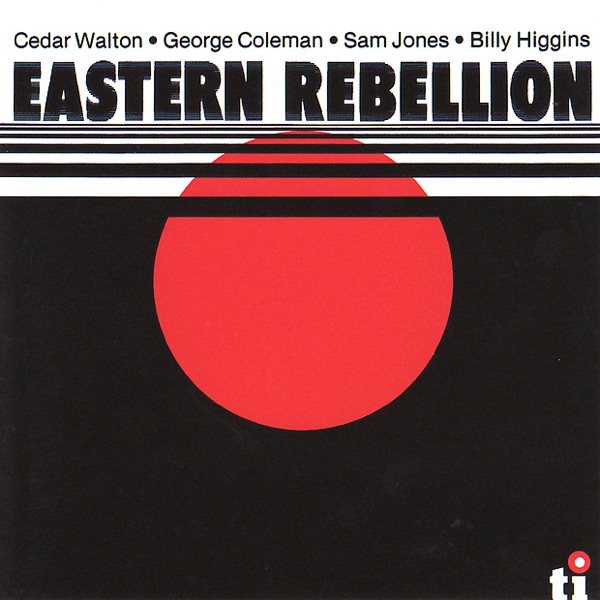
As a leader he made a run of excellent records through the 1970s and beyond, often working with his quartet Eastern Rebellion, which featured Bob Berg or George Coleman on tenor and the rhythm section of Sam Jones and Billy Higgins. That group had a particular chemistry — loose but tight, bluesy but harmonically sophisticated. Eastern Rebellion (1975) is a good place to start if you want to hear Walton in his element: relaxed, confident, swinging hard without making a big deal of it.

What's worth knowing before you press play is that Walton rewards attention but doesn't demand it. His music works fine as background, but if you actually listen, you'll keep catching things — a chord substitution that's just slightly unexpected, a left-hand voicing that locks the rhythm in a satisfying way, a phrase that resolves somewhere you didn't quite predict. He wasn't trying to shock anyone. He just knew how to play, and he did it consistently for about fifty years.

Facts
BornJanuary 17, 1934, Dallas, Texas, USA
DiedAugust 19, 2013, Brooklyn, New York, USA
InstrumentPiano
ActiveLate 1950s – 2013
Known forJazz Messengers recordings, Eastern Rebellion quartet, compositions including "Mosaic" and "Ugetsu"
Connections
Art BlakeyBandleader, Jazz Messengers — New York
→
Billy HigginsLongtime rhythm section partner — Los Angeles / New York
→
Freddie HubbardCollaborator, multiple recordings — New York
→
Read more
GuideBilly Higgins at 90: the drummer who played on everything

Discography

42 records
♫
Spectrum
1968
Soul Cycle
Soul Cycle
1970
Breakthrough!
Breakthrough!
1972
A Night at Boomers, Volume 1
1973
A Night at Boomers, Volume 2
1973
Mobius
Mobius
1975
Eastern Rebellion 3
Eastern Rebellion 3
1975
Eastern Rebellion 2
Eastern Rebellion 2
1975
Eastern Rebellion
Eastern Rebellion
1975
♫
Pit Inn
1975
Eastern Rebellion 4
Eastern Rebellion 4
1975
Firm Roots
Firm Roots
1976
Cedar
Cedar
1978
Animation
Animation
1978
The Maestro
The Maestro
1981
Piano Solos
Piano Solos
1981
Heart & Soul
Heart & Soul
1982
Walton, Carter & DeJohnette
1983
It Don't Mean a Thing If You Can't Tap Your Foot to It
1984
The Trio, Vol. 1
The Trio, Vol. 1
1985
Cedar's Blues
Cedar's Blues
1985
Blues for Myself
Blues for Myself
1986
Cedar Walton Plays
Cedar Walton Plays
1987
This Is for You John
1987
Up Front
Up Front
1987
♫
As Long as There's Music
1990
Among Friends
Among Friends
1990
Off Minor
Off Minor
1991
The Harem
The Harem
1991
Live at Maybeck Recital Hall, Volume Twenty-Five
1993
Composer
Composer
1996
Night Flight
Night Flight
1996
Naima
Naima
1997
♫
Three Sundays in the Seventies: "Live" at the Left Bank
2000
The Promise Land
The Promise Land
2001
Latin Tinge
Latin Tinge
2002
Underground Memoirs
Underground Memoirs
2005
New York Time
New York Time
2006
One Flight Down
One Flight Down
2006
Midnight Waltz
Midnight Waltz
2007
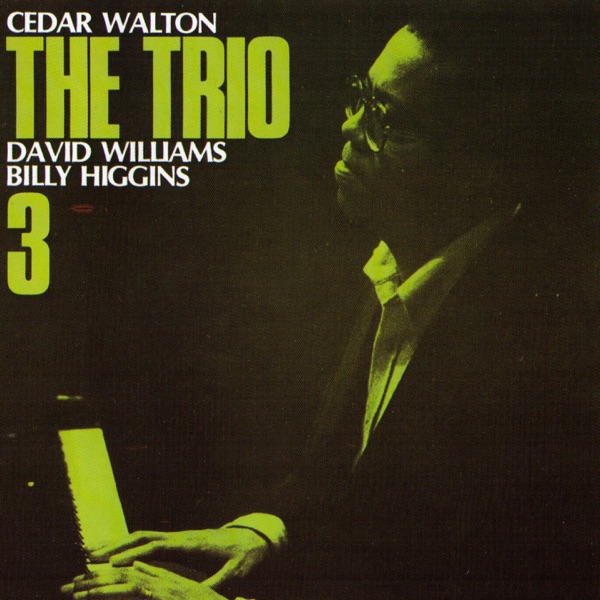
The Trio, Vol. 3
The Trio, Vol. 3
2007
Seasoned Wood
Seasoned Wood
2008

Collaborations

Live on Youtube

Explore Further

Selected connections
Pianist, USA
Bobby Timmons
Another Jazz Messengers pianist from the same era, bluesier and more gospel-inflected — useful contrast to Walton's more angular approach.
Explore →
Album, 1975
Eastern Rebellion
Walton's best introduction as a leader — the quartet is tight, the repertoire is strong, and the whole thing swings without effort.
Explore →

Who's playing
Listen next
Recording Info
Track listing
Musicians
Further Reading
Read more

Where next?

More by this artist

Albums with the same musicians

From the same era

Similar artists

inside the sleeve
Growing
Jazz, explained without pretension.
Read · Follow the connections · Press play
Right now: 7,100+ albums · 440+ artists
Start here
New to jazz? These artists are good places to start.
Loading…
Explore
Nine records worth getting lost in.
Born today
Album of the day
A landmark record, every day.
Read
  • Loading…
Article archive →
Recently added
Purpose
Inside the Sleeve is your companion on a journey through jazz — not a textbook, but something closer to a knowledgeable friend sitting next to you while you listen. Read about an artist, press play, follow a connection, discover an album you didn't know you needed.
Suggestions
Read

Articles

Essays, guides, and lists about jazz and the records that matter.

Loading…

Genre

Key Artists
Further Reading

Essential Albums

Related Genres

In This Genre

About

Inside the Sleeve

Work in progress

Inside the Sleeve grows continuously — new artists and albums are added, essays refined, as visitors explore and our editors follow up on what they find. Content, features, and design are still evolving; use the Report error button on any page to flag something that seems off.

Content

Every artist, album, and release date on Inside the Sleeve is real — verified against trusted sources including MusicBrainz and Wikipedia. We don't invent discographies or fabricate records. AI compiles that verified information into readable prose — essays on artists, albums, and the music itself. We can't manually review every essay before publishing, but every reported error is checked by a human editor.

Inside the Sleeve is not a review site. We're not here to rate or rank — we're here to guide you in. Where an album stands out, we'll say so. Where an artist changed everything, you'll know why. But we won't tear anything down. Jazz history is complex and sources sometimes disagree — if you spot something that seems off, please report it.

Streaming

Inside the Sleeve links to Spotify and Apple Music so you can listen while you read. These are not affiliate links. For Spotify, links open a search on open.spotify.com — we do not have direct links to specific recordings. For Apple Music, direct links are used where available, otherwise a search is opened.

Your choice of streaming service is stored locally in your browser only. It is never sent to our servers.

We're working on deeper Spotify integration, including direct links to specific recordings.

Privacy

Inside the Sleeve does not collect personal data and does not use cookies. We count page visits anonymously using a self-hosted analytics tool — no personal identifiers are stored, and the data never leaves our own server. The only preference stored on your device is your streaming service choice, saved locally in your browser and never transmitted.

When you submit a suggestion or error report, the text you write is stored in our database. No name or email is required or collected unless you choose to provide one.

Third-party services

Spotify and Apple Music are independent services with their own terms of use and privacy policies. Inside the Sleeve is not affiliated with or endorsed by either company.

Support

Inside the Sleeve is free and ad-free. If you enjoy it, a coffee helps cover server costs and keeps the project going.

Amazon

Some book recommendations on Inside the Sleeve link to Amazon. Buying through these links costs you nothing extra — but Amazon pays us a small commission, which goes directly towards keeping the site running. It's a simple way to support the project if you were going to buy the book anyway.

As an Amazon Associate, Inside the Sleeve earns from qualifying purchases.

Questions or feedback? Use the suggestion box on the front page.

Inside the Sleeve — A guide for those who want to go beyond the obvious About & Privacy