1968 · Album
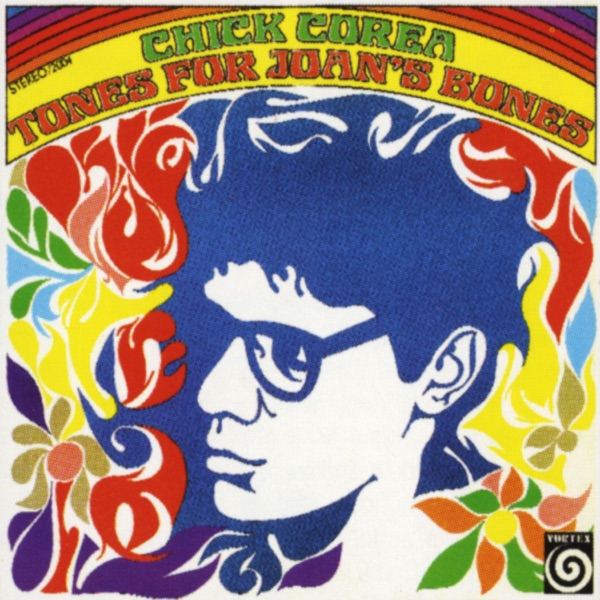
Tones for Joan's Bones
Recorded 1968 · Solid State · Produced by Not definitively documented
A Young Pianist Finds His Voice
Corea's debut announces a musician already comfortable leading a session and thinking on his feet.
This is Chick Corea's first record as a leader, and you can hear a young pianist still figuring out what matters to him. Tones for Joan's Bones (1968) comes after he'd already played with Willie Bobo and Herbie Hancock, so he knew the landscape. But here he gets to choose the direction. The album moves between uptempo post-bop runs and slower, more introspective moments. What strikes you is how clean and precise his playing is—no wasted motion, everything purposeful.
Corea hired solid players who understand the assignment. Joe Farrell on saxophone and Woody Shaw on trumpet bring real voices to these pieces, not just serviceable backgrounds. Jimmy Garrison on bass and Joe Chambers on drums anchor things without overthinking it. The title track sits somewhere between bop and something more experimental, with Corea's comping sharp and forward. "Litha" opens with space and patience, letting ideas breathe before building. These aren't complicated tunes—they're just well-made vehicles for conversation between players who listen to each other.
This record sits at the beginning of his career, before he became a household name or started chasing every new direction. It's not his most celebrated work, and honestly, it's not always revelatory. But it matters because it shows Corea as a young musician with taste and restraint, not yet trying to reinvent jazz but genuinely interested in good playing and smart arrangements. If you want to hear where he came from before the fusion experiments and the virtuosity became the main point, this is the place. It's a solid, likeable record that doesn't overstay its welcome.
Who's playing
Where next?
More by Chick Corea

Crystal Silence 1973

Romantic Warrior 1976

The Chick Corea Acoustic Band 1989
The Chick Corea Elektric Band 1986
The musicians on this record
♫
In the Beginning 1965
Woody Shaw
plays trumpet here
plays trumpet here
♫
The Almoravid 1974
Joe Chambers
plays drums (drum set) here
plays drums (drum set) here

Home 1980
Steve Swallow
plays double bass here
plays double bass here