Where do you listen?
Choose your streaming service
inside the sleeve
Loading…
inside the sleeveITS
⌕
Read About
Piano - United States - Post-Bop Modernist

Andrew
Hill

1937 - 2007, Chicago, Illinois, USA

Andrew Hill was a pianist and composer whose music occupied a restless middle ground between free jazz abstraction and structured melodic composition. His recordings for Blue Note and other labels in the 1960s revealed an artist determined to expand jazz harmony and rhythm beyond conventional frameworks, creating soundscapes both intellectually demanding and emotionally austere.

Post-BopAvant-Garde Jazz
Andrew Hill

Angles of Unresolved Tension

Andrew Hill showed up in New York in the early 1960s knowing how to play piano the classical way, but he was impatient with how jazz musicians were doing things. His left hand worked like a drummer's hands—hitting the keys with real force and independence. His right hand played these jagged lines that seemed to dodge the beat instead of landing on it. While other pianists were building solid structures, Hill was sketching quick, sharp shapes and leaving gaps. He'd create uncomfortable moments and never resolve them. This made him exactly the kind of piano player saxophonists wanted when they were trying to find new sounds, and it made him interesting to producers brave enough to put out records that weren't easy to listen to.

His early records for Blue Note, especially Point of Departure (1964) and Compulsion (1965), basically show you how to think differently about what piano could do in modern jazz. Hill didn't use the usual harmonic framework that helped other modernists. Instead, his songs posed questions with no answers, created tensions that never got resolved. Drummers like Roy Haynes and Joe Chambers figured out how to make sense of it rhythmically, even when it sounded like chaos. Saxophonists like Eric Dolphy and Ken McIntyre realized that in Hill's playing they had someone who wouldn't tone down their craziest ideas.

But Hill's uncompromising style probably hurt his career. When Herbie Hancock and Chick Corea moved toward fusion and made things more accessible, Hill kept making his music harder and more formal. In his later years he taught, wrote for orchestras, and recorded here and there—important work that just never got the attention it deserved. His refusal to make his music prettier ended up being both his greatest strength and what kept him from getting famous.

Hearing Hill now, almost twenty years after he died, you realize he was further ahead than even the experimental musicians of his time. His belief that jazz composition could be serious and intellectual while staying spontaneous is still something to argue about. He found a space that's still mostly empty—somewhere between Monk's singular voice and free jazz's complete break with structure. Hill was a hard teacher, but he knew what he was doing.

Facts
BornJune 30, 1937, Chicago, Illinois
DiedApril 20, 2007, New York
InstrumentPiano, Composer
Active1957–2007
Known forPost-bop composition, angular harmonic language, modernist sensibility
Connections
Eric DolphySaxophonist collaborator, New York
→
Roy HaynesDrummer, numerous sessions
→
Joe ChambersDrummer collaborator, New York
→
Ken McIntyreSaxophonist, experimental partnership
→
Read more
LabelBlue Note Records: 10 albums that defined a label

Discography

13 records
The Capitol Vaults Jazz Series
1959
Dance With Death
Dance With Death
1960
Dusk
Dusk
1961
Black Fire
Black Fire
1964
Point of Departure
Point of Departure
1965
Point Of Departure (The Rudy Van Gelder Edition)
1966
Compulsion
Compulsion
1967
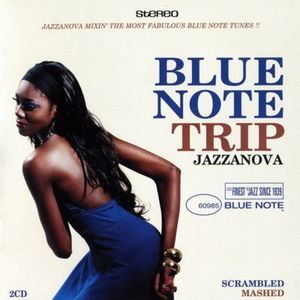
Blue Note Trip 5:Scrambled / Mashed
1968
Andrew!!!
Andrew!!!
1968
Grass Roots
Grass Roots
1968
Hommage
Hommage
1975
Pax
Pax
2006
Time Lines
Time Lines
2006

Collaborations

Live on Youtube

Explore Further

Selected connections
Album, 1964
Point of Departure
Hill's definitive statement: a masterpiece of composition and restraint featuring Eric Dolphy and Roy Haynes.
Explore →
Album, 1965
Compulsion
The follow-up that deepens Hill's harmonic investigations with a larger ensemble approach.
Explore →
Pianist, United States
Thelonious Monk
The spiritual precursor to Hill's approach to piano as an individual voice rather than harmonic anchor.
Explore →

Who's playing
Listen next
Recording Info
Track listing
Musicians
Further Reading
Read more

Where next?

More by this artist

Albums with the same musicians

From the same era

Similar artists

inside the sleeve
Growing
Jazz, explained without pretension.
Read · Follow the connections · Press play
Right now: 7,100+ albums · 440+ artists
Start here
New to jazz? These artists are good places to start.
Loading…
Explore
Nine records worth getting lost in.
Born today
Album of the day
A landmark record, every day.
Read
  • Loading…
Article archive →
Recently added
Purpose
Inside the Sleeve is your companion on a journey through jazz — not a textbook, but something closer to a knowledgeable friend sitting next to you while you listen. Read about an artist, press play, follow a connection, discover an album you didn't know you needed.
Suggestions
Read

Articles

Essays, guides, and lists about jazz and the records that matter.

Loading…

Genre

Key Artists
Further Reading

Essential Albums

Related Genres

In This Genre

About

Inside the Sleeve

Work in progress

Inside the Sleeve grows continuously — new artists and albums are added, essays refined, as visitors explore and our editors follow up on what they find. Content, features, and design are still evolving; use the Report error button on any page to flag something that seems off.

Content

Every artist, album, and release date on Inside the Sleeve is real — verified against trusted sources including MusicBrainz and Wikipedia. We don't invent discographies or fabricate records. AI compiles that verified information into readable prose — essays on artists, albums, and the music itself. We can't manually review every essay before publishing, but every reported error is checked by a human editor.

Inside the Sleeve is not a review site. We're not here to rate or rank — we're here to guide you in. Where an album stands out, we'll say so. Where an artist changed everything, you'll know why. But we won't tear anything down. Jazz history is complex and sources sometimes disagree — if you spot something that seems off, please report it.

Streaming

Inside the Sleeve links to Spotify and Apple Music so you can listen while you read. These are not affiliate links. For Spotify, links open a search on open.spotify.com — we do not have direct links to specific recordings. For Apple Music, direct links are used where available, otherwise a search is opened.

Your choice of streaming service is stored locally in your browser only. It is never sent to our servers.

We're working on deeper Spotify integration, including direct links to specific recordings.

Privacy

Inside the Sleeve does not collect personal data and does not use cookies. We count page visits anonymously using a self-hosted analytics tool — no personal identifiers are stored, and the data never leaves our own server. The only preference stored on your device is your streaming service choice, saved locally in your browser and never transmitted.

When you submit a suggestion or error report, the text you write is stored in our database. No name or email is required or collected unless you choose to provide one.

Third-party services

Spotify and Apple Music are independent services with their own terms of use and privacy policies. Inside the Sleeve is not affiliated with or endorsed by either company.

Support

Inside the Sleeve is free and ad-free. If you enjoy it, a coffee helps cover server costs and keeps the project going.

Amazon

Some book recommendations on Inside the Sleeve link to Amazon. Buying through these links costs you nothing extra — but Amazon pays us a small commission, which goes directly towards keeping the site running. It's a simple way to support the project if you were going to buy the book anyway.

As an Amazon Associate, Inside the Sleeve earns from qualifying purchases.

Questions or feedback? Use the suggestion box on the front page.

Inside the Sleeve — A guide for those who want to go beyond the obvious About & Privacy