1965 · Album
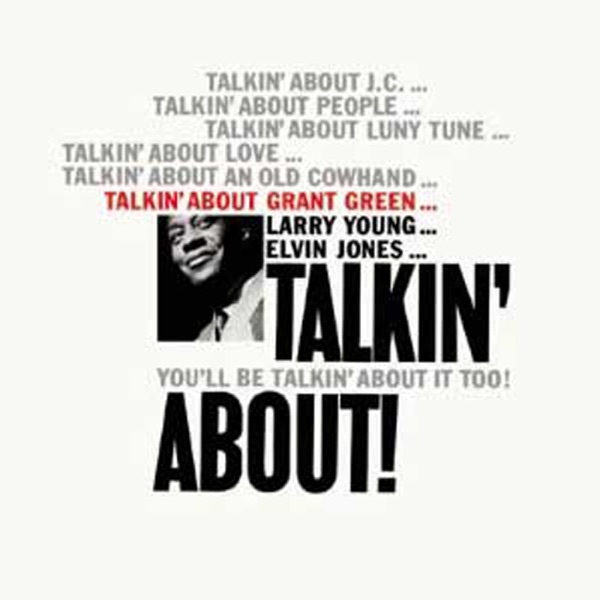
Talkin’ About
Recorded 1964 · Blue Note · Personnel: [Grant Green] (guitar), [Larry Young] (organ), [Elvin Jones] (drums)
Three Musicians, One Room, Pure Invention
Green, Young, and Jones found a middle ground between soul-jazz roots and modal exploration that still sounds fresh.
In 1964, Grant Green walked into the studio with Larry Young on organ and Elvin Jones on drums — a stripped-down trio with no safety net, no horns to fill space, nowhere to hide. That constraint became the album's strength. Green had spent his early years mining soul-jazz grooves, deep and funky, but by this point he was reaching toward something more open and spacious. Young and Jones gave him room to breathe. The organ could anchor or float depending on what the moment needed. Jones, one of the most intuitive drummers in jazz, didn't impose a tempo; he responded. What came out was neither retro nor avant-garde, just honestly swinging and genuinely inventive.
The performances work because nobody wastes motion. Green's tone is warm and his lines have actual weight — he wasn't trying to play fast or impress anyone. Young's organ work sits somewhere between gospel and exploration, never precious. Jones plays with restraint, which makes his moments of intensity count. Allmusic reviewer Steve Huey understood what happened here, calling it a terrific album that ranks among Green's finest work.
This isn't Green's most famous record, and it sits apart from his biggest commercial moments. But if you want to hear what happens when three musicians trust each other in a room and record what actually occurs, rather than what someone thinks should occur, this album delivers exactly that. It's essential listening for anyone who cares about how jazz actually works at the level of conversation rather than performance.
Who's playing
Where next?
More by Grant Green
All 38 albums →


The musicians on this record
Their own records, close in time


