1984 · Album
Scenes In The City
Columbia Records · Produced by Not specified in verified sources
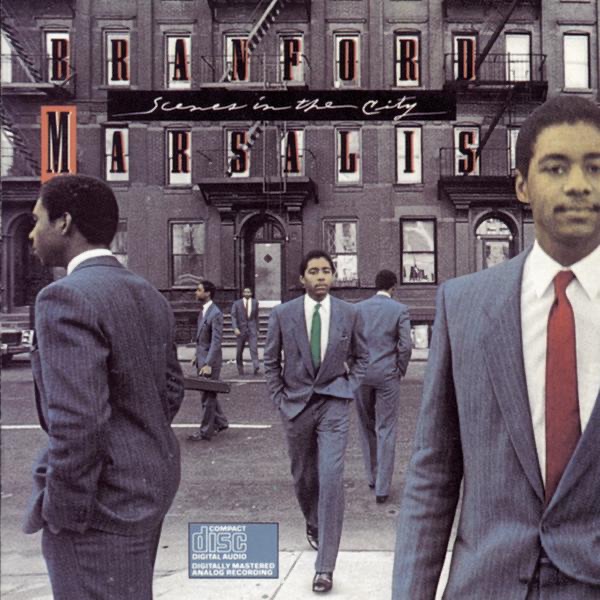
A Young Voice Finds Its Footing in the City
Marsalis announced himself not as a prodigy mimicking his elders, but as a bandleader with his own sound.
When Branford Marsalis released Scenes in the City (1984), the jazz world was watching. He had already played alongside his father and brothers on Fathers and Sons (1982), but this was different—his debut as a leader, and critics took notice. Both AllMusic and The Penguin Guide to Jazz Recordings gave it their highest marks, signaling that the young saxophonist had something real to say. The album arrived cleanly and built its reputation on merit rather than hype, positioning itself as a legitimate entry point into Marsalis's work rather than a curiosity about a famous family.
What makes the record worth hearing is how Marsalis navigates between restraint and ambition. He's surrounded by capable musicians—Ron Carter and Ray Drummond on bass, Kenny Kirkland and Mulgrew Miller on piano, Robin Eubanks on trombone, and the drumming team of Marvin "Smitty" Smith and Jeffrey "Tain" Watts—but the album never feels crowded. Marsalis plays with control, choosing when to push and when to sit back. The ensemble work is sharp and responsive, the kind of interplay that comes from players who listen to each other. This isn't a young musician trying to prove how much he can do; it's one learning how to lead without overwhelming the room.
For listeners new to Marsalis, this is a solid place to start. It shows him thinking clearly about melody and structure, working in a tradition without sounding trapped by it. The album holds up because it's built on fundamentals rather than flash—musicians playing together, material that matters, recording quality that lets you hear what's actually happening. It's the sound of someone early in his career who already understands that leadership in a band means something specific.
Who's playing
Ron Carterdouble bass
Ray Drummonddouble bass
Charnett Moffettdouble bass
Phil Bowlerdouble bass
Mulgrew Millerpiano
Kenny Kirklandpiano
Branford Marsalistenor saxophone
Robin Eubankstrombone
Marvin “Smitty” Smithdrums
Jeffrey “Tain” Wattsdrums
Where next?
More by Branford Marsalis
Royal Garden Blues 1986
Ma Rainey's Black Bottom (Music from the Netflix Film) 2020
Eternal 2004
Random Abstract 1988
The musicians on this record
Their own records, close in time