2020 · Album
Ma Rainey's Black Bottom (Music from the Netflix Film)
Film Director: George C. Wolfe · Play Source: August Wilson (1982) · Film Release Year: 2020 · Note: Specific recording and production details for this soundtrack are not fully verified in standard sources
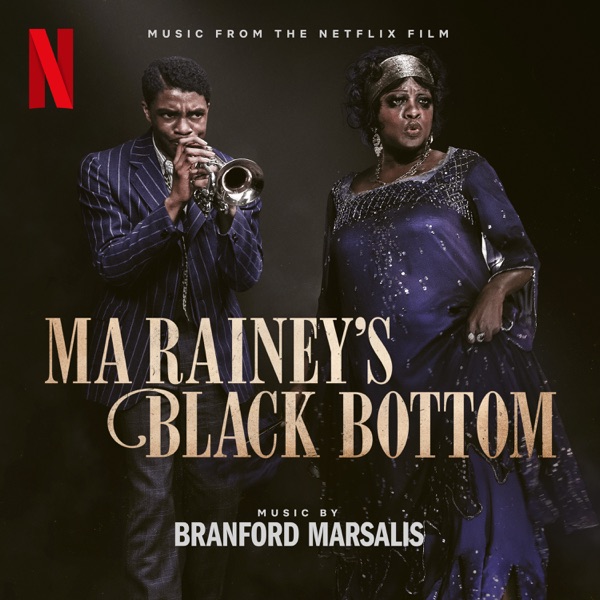
Blues in a Recording Studio, 1920s Chicago
Marsalis threads Wilson's raw dialogue with jazz that breathes, doesn't lecture.
The music for Ma Rainey's Black Bottom isn't trying to sound like 1920s Chicago blues, even though that's where the play lives. Branford Marsalis scored something more immediate — a conversation between the stage and modern jazz sensibility. The album works because Marsalis understood that August Wilson's script didn't need period recreation. It needed space. The piano shows up when the tension in the studio tightens. The horn lines feel like characters talking over each other. There's no strings section doing emotional heavy lifting, no orchestration that insists you feel something. Instead, Marsalis lets the drama in Wilson's words do the work, and the jazz sits alongside it like another voice in the room.
This score sits somewhere between functional soundtrack work and standalone listening experience, which is rare. You can put it on without having seen the film and find something honest — the playing is clean, the arrangements unpretentious. Marsalis doesn't overstate. A trumpet line enters when needed. A bass figure locks in and holds. The sessions probably weren't long or complicated, and that restraint shows. Compare this to the orchestral swells you'd expect from a major studio film, and you realize how much confidence it takes to play this quietly.
If you know Marsalis from his soprano saxophone work or his classical recordings, this sits apart — no virtuosity on display for its own sake, no need to prove anything. It's useful for fans who want to hear him work in a different context, but it's not essential Marsalis. The real draw is the film itself. If you've seen George C. Wolfe's movie, this score will bring you back to that studio immediately. If you haven't, the music alone won't fully explain itself. Think of it as a companion piece rather than a standalone statement.