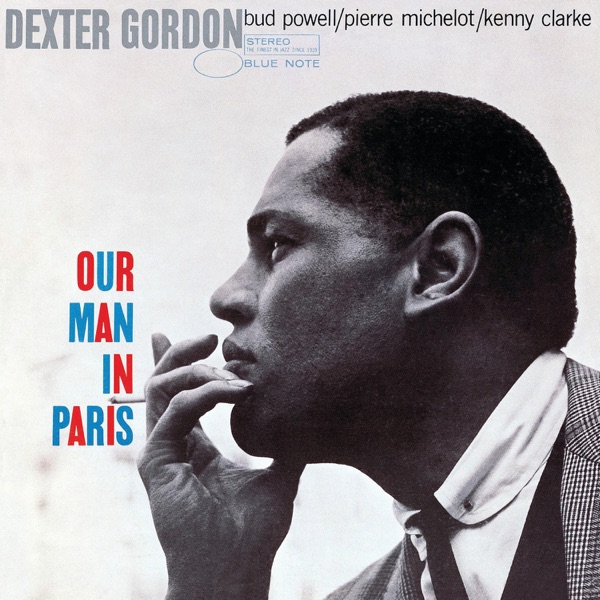
Three Expatriates and a Visitor
Gordon arrives in Paris to play with musicians who'd already built something real there.
By 1963, Paris had become a refuge for African American jazz musicians looking to escape the racial constraints of home. Bud Powell had settled there in 1959, and Kenny Clarke was already established as a working musician in the city. Pierre Michelot, the native Parisian bassist, knew this world well. The three had played together enough to develop what they called themselves: The Three Bosses. When Dexter Gordon came to Paris for this session, he was joining a functioning unit, not a pickup group assembled for an album.
What you hear on Our Man in Paris (1963) is Gordon's tenor saxophone cutting through a rhythm section that knows how to push back. This isn't a showcase where everyone steps aside for the horn solo. The interplay between Powell's piano and Clarke's drums has weight and argument to it. They don't just keep time; they shape the conversation. The recording itself has a live, slightly rough quality—the kind of sound you get when real musicians play in a room together without excessive overdubs or studio engineering. Gordon's tone is warm and direct, neither aggressive nor soft, and he seems comfortable letting the music develop rather than rushing to prove anything.
In Gordon's catalog, this sits between his earlier Blue Note records and the renaissance he'd have later in the 1970s. It's not his most celebrated work, but it matters because it captures him at a moment when American jazz musicians abroad were doing something specific: making music without the constant pressure of the segregated American scene. If you've already heard Gordon's 1960s work and want to understand how he sounded in Europe, this belongs in your collection. For newcomers, his earlier albums are easier entry points. This one requires patience but rewards it.
Who's playing
Where next?


The musicians on this record
Their own records, close in time


