1963 · Album
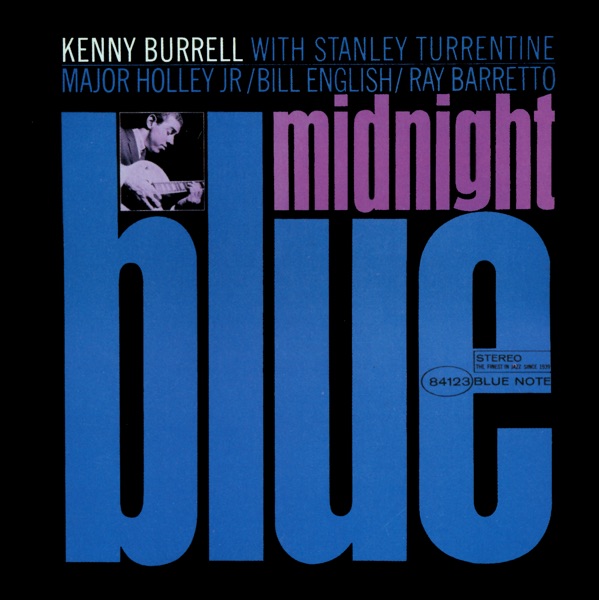
Midnight Blue
Recorded 1963 · Blue Note Records · Produced by Alfred Lion
Late Night, Low Heat, Pure Guitar
Burrell keeps things understated and cool, and that restraint is exactly the point.
If you want to understand what made Blue Note Records special in the early 1960s, Kenny Burrell's Midnight Blue (1963) is a pretty good place to start. It is a relaxed, after-hours album — bluesy without being showy, swinging without being frantic. Burrell plays with the kind of confidence that doesn't need to announce itself. He stays in a groove and trusts the listener to settle in with him. This is not Burrell showing off his range. It is him doing one thing well and knowing it.
The band is small and well-chosen. Stanley Turrentine on tenor saxophone is a perfect foil — he plays with a warm, slightly rough tone that matches the mood without competing with it. Ray Barretto on conga adds texture throughout, giving the rhythm section a loose, almost informal feel that keeps the whole record from sounding too buttoned-up. Major Holley on bass and Bill English on drums fill out the bottom end without fuss. The opener, "Chitlins Con Carne," is probably the track you'll come back to most — a slow, rolling blues that feels like it was recorded at two in the morning in the best possible way.
This album gets recommended a lot as an entry point for people new to jazz guitar, and that reputation is deserved. It is not a difficult listen. But do not mistake accessible for slight. Burrell is making real musical choices here — about space, about when not to play, about how much blues to let bleed into a line. If you already know Burrell well, this might not surprise you, but it will remind you why you liked him in the first place.
Who's playing
Major Holleydouble bass
Kenny Burrellelectric guitar
Stanley Turrentinetenor saxophone
Bill Englishdrums
Ray Barrettocongas
Where next?
More by Kenny Burrell
All 44 albums →

The musicians on this record
Their own records, close in time


