1957 · Album
Louis Armstrong Meets Oscar Peterson
Recorded 1959 · Verify from original source · Produced by Verify from original source

Oscar Peterson's Trio and Armstrong's Voice
Peterson's piano drives the session with purpose, letting Armstrong do what he does best—sing.
What makes this album work is Oscar Peterson's refusal to defer. Armstrong had spent decades as the dominant voice in any room, and Peterson wasn't interested in being furniture. His trio—disciplined, swinging, unapologetic about its own momentum—meets Armstrong on equal terms rather than serving as backdrop. Peterson's touch on these standards is businesslike and energetic, keeping the tempo moving and the harmonic ground solid beneath Armstrong's trumpet and vocals.
This is a straightforward pairing: Armstrong and Peterson were both at established points in their careers, and neither had anything to prove. The album doesn't reinvent either man, nor does it aim to. What it offers instead is the pleasure of two accomplished musicians working through familiar material with no pretense or overreach. Armstrong's playing and singing are as warm and direct as always, but it's Peterson's insistent, swinging piano that gives the session its particular flavor—not deferential, not showy, just present and driving forward.
The critical response was mixed, with some finding the match less than essential. It remains a solid session rather than a peak moment for either artist, but there's nothing awkward or tentative about it. Peterson's trio gives Armstrong something to play against, and that straightforward collision of two confident approaches has its own appeal, even if it doesn't reshape anyone's understanding of either musician.
Who's playing
Where next?
More by Louis Armstrong

Satch Plays Fats: A Tribute to the Immortal Fats Waller 1955

Disney Songs the Satchmo Way 1968

Bing & Satchmo 1960

Louis Armstrong and His Friends 1970
The musicians on this record
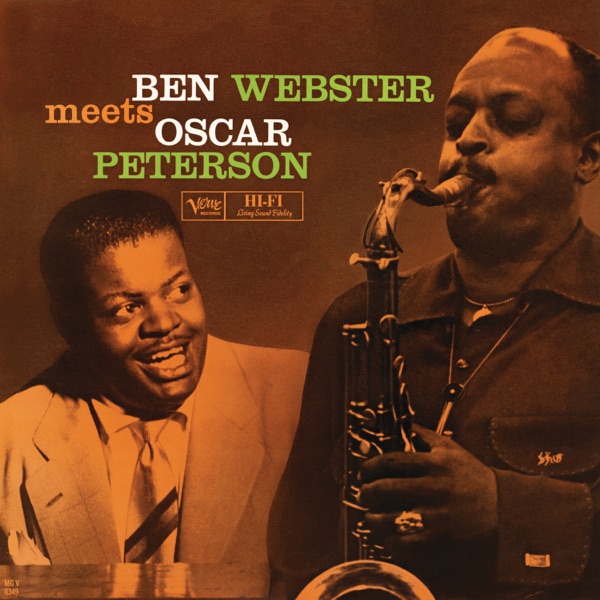
Ben Webster Meets Oscar Peterson 1959
Oscar Peterson
plays piano here
plays piano here

Cannonball Adderley and the Poll-Winners 1960
Ray Brown
plays double bass here
plays double bass here

Herb Ellis Meets Jimmy Giuffre 1959
Herb Ellis
plays guitar here
plays guitar here