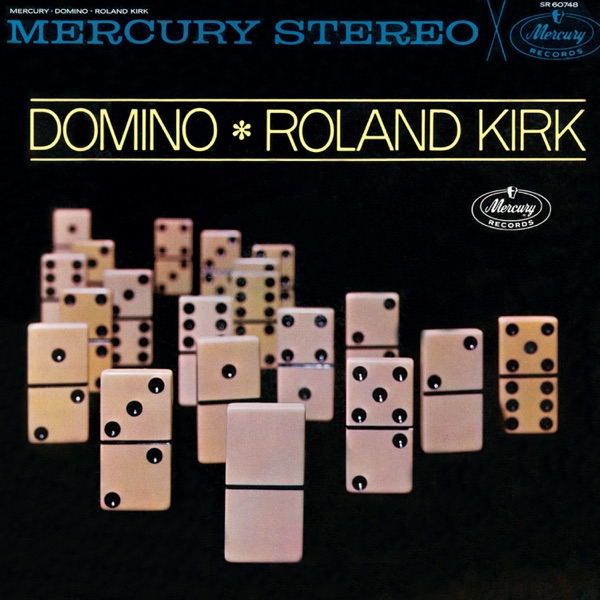
Kirk Finding His Voice on Domino
The genesis of Kirk's more assertive presence is thoroughly evident on this turning-point session.
Domino marks the moment Rahsaan Roland Kirk stopped sounding like a talented visitor in other people's music and started sounding like himself. His earlier work showed gifts—the technical command, the harmonic curiosity, the willingness to play multiple saxophones at once—but lacked the urgency that would define him. Here, recorded for Mercury in 1962, that urgency arrives. The album catches him mid-transformation, still respectful enough to include straight bebop and ballad playing, but restless enough to stretch into stranger territory.
The centerpiece is "Where Monk and Mingus Live," a medley that pairs Kirk's own tribute with Thelonious Monk's "Let's Call This." It's an odd coupling—Monk's composition is light and spare, Kirk's framing is dense and searching—but that collision is exactly the point. Kirk isn't arranging to display taste; he's building a statement about where his music sits in relation to the masters. The sessions also feature Herbie Hancock on piano, adding harmonic sophistication without softening the edges.
AllMusic reviewer Lindsay Planer rated this 4.5 out of 5 stars, crediting Kirk's "expanding musical universe." It's not his masterpiece—that would come later, when he'd push even harder—but Domino is where you hear the player he was about to become, and that's worth the listen. Start here if you want to understand how Kirk got from journeyman to revolutionary.