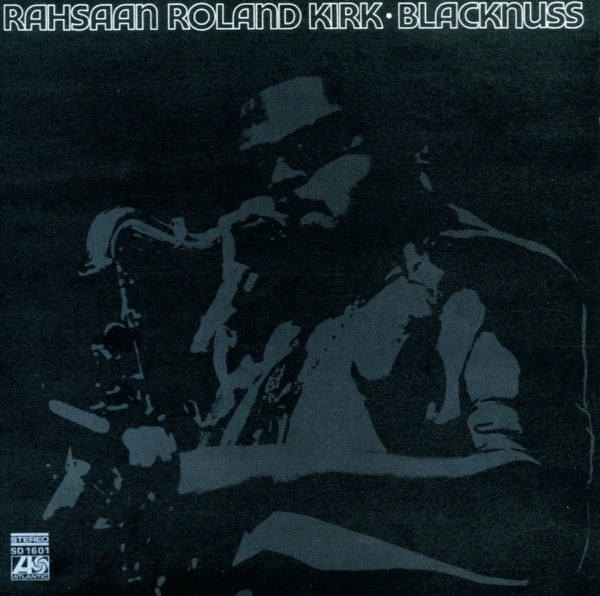
Kirk's Funkiest Statement, Strangest Choice
Kirk surrounded himself with session players and funk groove to make something genuinely strange.
By 1972, Rahsaan Roland Kirk had spent the better part of a decade establishing himself as one of jazz's most unpredictable voices — a multi-instrumentalist who could play three saxophones at once and make it matter. Blacknuss sits oddly in his catalog, a deliberate turn toward soul-jazz and funk that feels less like a natural evolution and more like a experiment he wanted to get out of his system. Recorded in 1971, it pairs Kirk's woodwind intensity with a roster of session musicians — Bernard "Pretty" Purdie on drums, Cornell Dupree and Billy Butler on guitar, Richard Tee and Sonelius Smith on piano — who were built for groove, not free exploration.
The album leans hard into rhythm and pocket. These are organized, funky takes on soul-jazz material, with Kirk's horns coloring the top while the rhythm section locks into something much closer to R&B than to his usual territory. Mickey Tucker and Mickey Turner on organ add that thick, churchy bottom end that grounds everything. There's nothing wrong with any of it — the musicianship is tight, the arrangements are clean — but it registers as a Kirk album only because Kirk is on it. His voice, usually so dominant and strange, shares the spotlight here instead of commanding it.
This is not the place to start with Kirk, nor is it a turning point. It's a side note, worth hearing if you're committed to understanding his range, but it reveals less about what made him essential than almost any of his other work from this period. The best Kirk recordings give you his full personality unfiltered. Blacknuss asks him to fit into someone else's framework, and while he does it well enough, that was never really his strength.
Who's playing
Henry Pearsonbass
Bill Salterbass
Sonelius Smithpiano
Richard Teepiano
Billy Butlerguitar
Cornell Dupreeguitar
Keith Lovingguitar
Charles McGheetrumpet
Dick Griffintrombone
Mickey Turnerorgan
Mickey Tuckerorgan
Khalil Mhdridrums
Bernard “Pretty” Purdiedrums
Joe Texidorpercussion
Arthur Jenkinspercussion
Richard Landrumcongas
Rahsaan Roland Kirkwoodwind