1994 · Album
Wanton Spirit
Verve Records · Released: 1994 · Personnel: Kenny Barron (piano), Roy Haynes (drums), Charlie Haden (bass)

Three Players, One Room, Honest Sound
Barron's skills finally got the honest picture they deserved, with Haynes and Haden in the room.
The session that became Wanton Spirit (1994) brought together three musicians operating at full confidence: Kenny Barron on piano, Roy Haynes on drums, and Charlie Haden on bass. This was not a debut or a reaching-for-something-new situation—by this point, Barron had absorbed decades of piano language, everything from the stride and harmonic weight of Tatum and Powell to Monk's angularity, Tommy Flanagan's melodic directness, McCoy Tyner's pentatonic color, and the rhythmic elasticity of Herbie Hancock. What the session captured was those influences fully integrated, no longer visible as influences but as Barron's own voice. Haynes and Haden were ideal partners: two musicians who understood how to listen, how to push without overplaying, how to let space do work. The resulting album works because nobody is trying to prove anything. It swings when it should, it hangs back when that's what the tune needs, and the three of them move through the material as if they've been playing together for years. Los Angeles Times reviewer Bill Kohlhaase heard it clearly: the album "makes up for Barron's near-miss recordings of the last few years while painting a more honest picture of his skills." AllMusic reviewer Lee Bloom noted how thoroughly Barron had absorbed his early influences and how completely that study had become his own language. The album was nominated for a 1996 Grammy Award for Best Jazz Instrumental Performance, recognition that arrived almost as confirmation of what was already audible on the tape.
Who's playing
Where next?
More by Roy Haynes

Question and Answer 1990
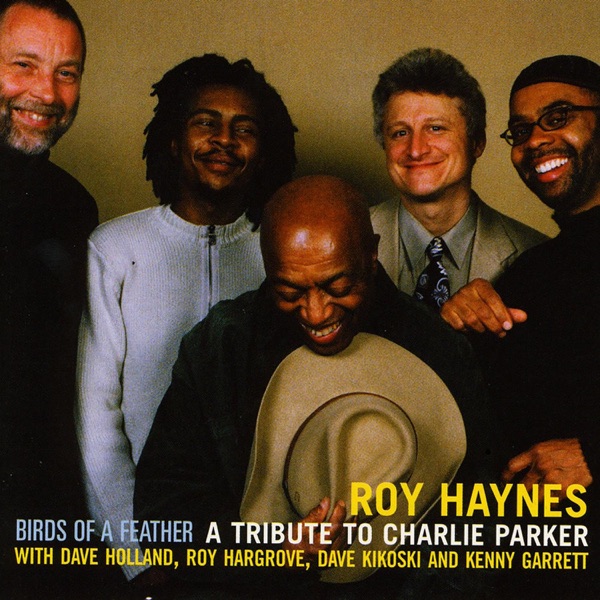
Birds of a Feather: A Tribute to Charlie Parker 2001

Cracklin’ 1963

Cymbalism 1963
The musicians on this record

Beyond The Missouri Sky 1997
Charlie Haden
plays double bass here
plays double bass here

Other Places 1994
Kenny Barron
plays piano here
plays piano here