1959 · Album
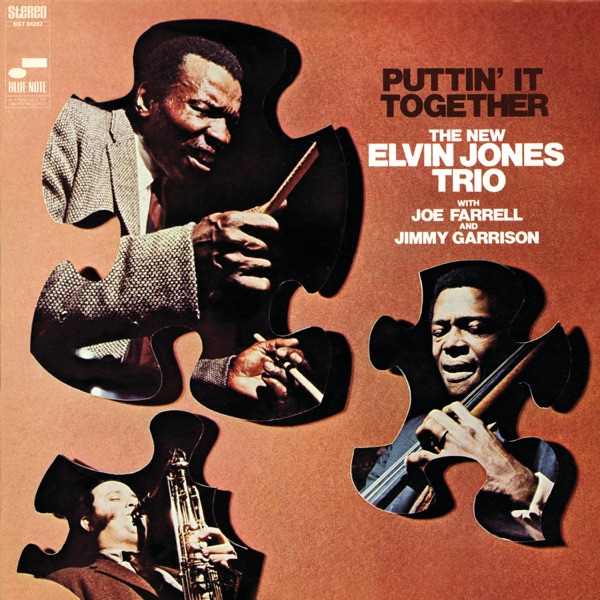
Puttin' It Together
Recorded 1959 · Riverside Records · Produced by Orrin Keepnews
When the Drums Refuse to Keep Time
Jones doesn't accompany the music—he argues with it, pushes it, reshapes it into something wilder.
By the time Elvin Jones recorded Puttin' It Together (1959), he'd already established himself as something other than a timekeeper. Where most drummers mark the beat, Jones interrogated it. This album sits at a peculiar moment in his trajectory—early enough that you can hear him still testing the limits of what a drum kit could say in a jazz ensemble, but confident enough that he's stopped asking permission.
Working alongside McCoy Tyner on piano and Jimmy Garrison on bass, Jones spends these sessions doing what he does best: making space collapse. On the faster numbers, his playing becomes almost conversational—trading ideas with Tyner's searching chords, pushing into polyrhythmic territories that shouldn't quite work but do. The slower pieces show his other strength: he doesn't just play drums softly, he changes the entire pressure of the music. Listen to how his brushwork pulls everyone toward something more introspective. This isn't background music. This is a drummer who believes the drums deserve equal say in what the music becomes.
If you're coming to Jones through his later work with John Coltrane, this album might feel like meeting him at a different stage—hungry, inventive, still discovering what's possible. It's not as immediately gripping as some of his better-known recordings, but that's precisely what makes it interesting. There's genuine experimentation happening here, a sense that everyone involved understands the rules well enough to bend them without breaking them. For anyone serious about understanding how he became one of jazz's most influential drummers, this is essential.
Who's playing