Where do you listen?
Choose your streaming service
inside the sleeve
Loading…
inside the sleeveITS
⌕
Read About

♫

Facts
Connections
Read more

Discography

Collaborations

Live on Youtube

Explore Further

Selected connections
1949 · Album

Charlie Parker with Strings

↑ Charlie Parker

Recorded 1949-1950 · Mercury Records · Produced by Norman Granz
Charlie Parker with Strings

Bird Meets the Orchestra: A Gentler Flight

Parker's bebop language suddenly wrapped in lush strings, a risk that mostly paid off.

By the time Charlie Parker with Strings came out, Parker had already reshaped modern jazz. The bebop revolution was his. But this record took a different path—strings instead of just a rhythm section, arrangements that softened the edges of his sharp, darting melodic lines. It sounds like a commercial move, and it was, but calling it a sellout misses what actually happens here. Parker's alto still cuts through. His phrasing still lands in unexpected places. The strings don't drown him out; they just give him a different stage.

The thing that makes this record work is restraint on both sides. The arrangements, written by Jimmy Carroll, don't try to be fancy or overwhelming. They sit behind Parker like a respectful audience, letting him lead. Tracks have a floating quality, almost romantic in places, which is wild coming from one of jazz's most aggressive minds. If you're used to Parker in small groups, knifing through standards at burning tempos, this will feel unfamiliar. That's partly the point. There's something almost vulnerable about a bebop master in this setting, and it's not uncomfortable to hear.

This isn't Parker at his absolute peak—that's earlier work with smaller groups where his inventiveness had nowhere to hide. But Charlie Parker with Strings found an audience that might have never heard bebop otherwise. The record proved Parker could exist in different contexts and still sound like himself. It's essential if you want the full picture of his range, even if the rougher, faster records remain the ones other musicians point to when they explain why he mattered so much.

Who's playing
Ray Browndouble bass
Stan Freemanpiano
Charlie Parkeralto saxophone
Buddy Richdrums
Frank Brieffviola
Bronislaw Gimpelviolin
Max Hollanderviolin
Milton Lomaskviolin
Frank Millercello
Mitch Milleroboe
Meyer Rosenharp
Myor Rosenharp
Listen next
By Charlie Parker
The Genius of Charlie Parker 1946
Buddy Rich's own record
Big Swing Face 1967
Buddy Rich plays drums (drum set) here
More Bebop
Mingus Three 1957
Hampton Hawes
Recording Info
Track listing
1April in Paris3:08
2Summertime2:48
3If I Should Lose You2:48
4I Didn't Know What Time It Was3:14
5Everything Happens to Me3:17
6Just Friends3:32
Musicians
Further Reading
Read more

Where next?

More by Charlie Parker
The Genius of Charlie Parker 1946
South of the Border 1952
Compact Jazz: Charlie Parker 1987
Charlie Parker 1954
All 23 albums →
The musicians on this record
Big Swing Face 1967
Buddy Rich
plays drums (drum set) here
This One's for Blanton! 1975
Ray Brown
plays double bass here
Their own records, close in time
More Bebop
Mingus Three 1957
Hampton Hawes
Genius of Modern Music, Volume 2 1951
Thelonious Monk
Jeru 1952
Gerry Mulligan
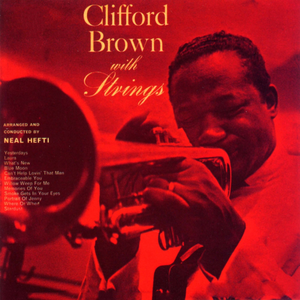
With Strings 1955
Clifford Brown
All 90 Bebop artists →

More by this artist

Albums with the same musicians

From the same era

Similar artists

inside the sleeve
Growing
Jazz, explained without pretension.
Read · Follow the connections · Press play
Right now: 7,100+ albums · 440+ artists
Start here
New to jazz? These artists are good places to start.
Loading…
Explore
Nine records worth getting lost in.
Born today
Album of the day
A landmark record, every day.
Read
  • Loading…
Article archive →
Recently added
Purpose
Inside the Sleeve is your companion on a journey through jazz — not a textbook, but something closer to a knowledgeable friend sitting next to you while you listen. Read about an artist, press play, follow a connection, discover an album you didn't know you needed.
Suggestions
Read

Articles

Essays, guides, and lists about jazz and the records that matter.

Loading…

Genre

Key Artists
Further Reading

Essential Albums

Related Genres

In This Genre

About

Inside the Sleeve

Work in progress

Inside the Sleeve grows continuously — new artists and albums are added, essays refined, as visitors explore and our editors follow up on what they find. Content, features, and design are still evolving; use the Report error button on any page to flag something that seems off.

Content

Every artist, album, and release date on Inside the Sleeve is real — verified against trusted sources including MusicBrainz and Wikipedia. We don't invent discographies or fabricate records. AI compiles that verified information into readable prose — essays on artists, albums, and the music itself. We can't manually review every essay before publishing, but every reported error is checked by a human editor.

Inside the Sleeve is not a review site. We're not here to rate or rank — we're here to guide you in. Where an album stands out, we'll say so. Where an artist changed everything, you'll know why. But we won't tear anything down. Jazz history is complex and sources sometimes disagree — if you spot something that seems off, please report it.

Streaming

Inside the Sleeve links to Spotify and Apple Music so you can listen while you read. These are not affiliate links. For Spotify, links open a search on open.spotify.com — we do not have direct links to specific recordings. For Apple Music, direct links are used where available, otherwise a search is opened.

Your choice of streaming service is stored locally in your browser only. It is never sent to our servers.

We're working on deeper Spotify integration, including direct links to specific recordings.

Privacy

Inside the Sleeve does not collect personal data and does not use cookies. We count page visits anonymously using a self-hosted analytics tool — no personal identifiers are stored, and the data never leaves our own server. The only preference stored on your device is your streaming service choice, saved locally in your browser and never transmitted.

When you submit a suggestion or error report, the text you write is stored in our database. No name or email is required or collected unless you choose to provide one.

Third-party services

Spotify and Apple Music are independent services with their own terms of use and privacy policies. Inside the Sleeve is not affiliated with or endorsed by either company.

Support

Inside the Sleeve is free and ad-free. If you enjoy it, a coffee helps cover server costs and keeps the project going.

Amazon

Some book recommendations on Inside the Sleeve link to Amazon. Buying through these links costs you nothing extra — but Amazon pays us a small commission, which goes directly towards keeping the site running. It's a simple way to support the project if you were going to buy the book anyway.

As an Amazon Associate, Inside the Sleeve earns from qualifying purchases.

Questions or feedback? Use the suggestion box on the front page.

Inside the Sleeve — A guide for those who want to go beyond the obvious About & Privacy