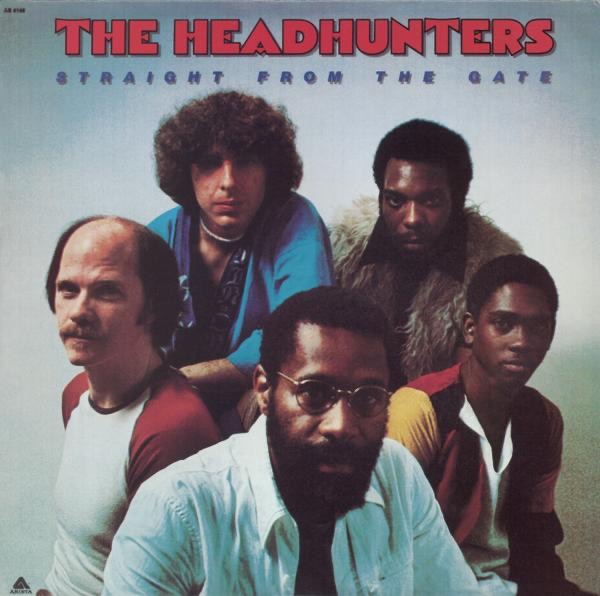
The Groove Took Over
Before the Headhunters, Herbie Hancock had already done the serious jazz thing — Blue Note dates, Miles Davis's rhythm section, the whole résumé. Then in 1973 he basically said forget it, formed a new band built around bass and drums locking into deep pocket grooves, and made Head Hunters (1973). It became one of the best-selling jazz albums ever, which tells you something: people who never bought a jazz record in their life bought that one.
The band itself was small but tight. Bennie Maupin on saxophones and bass clarinet gave it texture and a little mystery, Paul Jackson on electric bass was the real engine — his lines are still studied by bass players who've never heard of Coltrane — and Harvey Mason laid down the drum part on that first record that basically became a blueprint for funk drumming afterward. When Mike Clark took over on drums for Thrust (1974), the band got even looser and nastier in the best way, more syncopated, less predictable.
What you actually hear when you put this on is Herbie playing clavinet and synthesizers instead of just acoustic piano, riffing over bass lines that owe more to James Brown than to bebop. It's not complicated music in the way a Coltrane solo is complicated — it's complicated in a different way, in how the parts interlock, how much space everybody leaves. Bill Summers adding percussion on top of it all gives everything an extra layer of rhythm to get lost in.
Jazz purists at the time weren't thrilled. Too commercial, too simple, sold out — you've heard the arguments. But go back and actually listen to "Sly" or "Watermelon Man" reworked with that clavinet hook, and it's clear these guys weren't dumbing anything down. They were just speaking a different rhythmic language, one closer to Sly Stone and the JBs than to Bird.
The Headhunters never fully went away — they've reformed with different lineups over the decades, put out records well into the 2000s and beyond. But that mid-70s run is the reason sample-heavy hip hop producers still dig through crates looking for Headhunters cuts, and why funk bassists namecheck Paul Jackson the way guitarists namecheck Hendrix. This is jazz musicianship pointed at a completely different destination, and it got there.