Where do you listen?
Choose your streaming service
inside the sleeve
Loading…
inside the sleeveITS
⌕
Read About
Organ - United States - Soul Jazz

Jack
McDuff

1926 - 2001, United States

Brother Jack McDuff started out playing bass in blues bands around Chicago, but once he sat down at a Hammond B-3 he never really got up again. He built a sound that was greasy, churchy, and built for dancing, and along the way he gave young guitarists like George Benson and Pat Martino their first real education on a bandstand.

Soul JazzHard BopJazz Fusion
Jack McDuff

The Organ Trio's Working Man

If you want to understand what soul jazz actually sounds like in a room, not on a record sleeve, you start with Brother Jack McDuff. He came up playing upright bass in blues outfits in Chicago, which is probably why his left hand on the organ always sounded like it meant business — thick, percussive, walking basslines that didn't float, they stomped. He switched to organ in the mid-1950s almost by accident, filling in on a gig, and within a few years he had one of the most in-demand combos in the business.

What made McDuff different from some of his organ contemporaries was how disciplined his bands were. This wasn't just blowing over a groove — he ran a tight unit, usually organ, guitar, tenor, and drums, no bass player needed because his feet and left hand covered it. Albums like The Honeydripper (1961) and Live! (1963) show exactly what that band could do in front of a crowd: slow-burning blues, hard-swinging shuffles, and solos that never wandered too far from the pocket. Tenor man Red Holloway and drummer Joe Dukes were regulars, and together they made a sound that was less about flash and more about making a room move.

McDuff's real contribution, though, might be as a talent incubator. A teenage George Benson joined his band and learned how to phrase, how to comp, how to listen — skills that carried Benson straight into his own career as a leader. Pat Martino came through the band too, young and already dangerous on guitar. McDuff had an ear for musicians who were hungry, and he gave them a stage where they had to earn it every night, not just in the studio.

By the late 1960s he'd pushed his sound further into funk territory, picking up electric keyboards alongside the organ and leaning into a grittier, groove-heavy approach on records like Moon Rappin' (1969). Some purists wrote that period off as a sellout move, but it was really just McDuff doing what he always did — following where the dance floor was. He never stopped being a bandleader first and a stylist second, which is maybe why his catalog doesn't get talked about with the same reverence as Jimmy Smith's. He wasn't chasing a legacy. He was chasing a good gig on a Saturday night, and more often than not, he found one.

Facts
BornSeptember 17, 1926, Champaign, Illinois
DiedJanuary 23, 2001, Minneapolis, Minnesota
InstrumentHammond B-3 organ
Active1950s - 2001
Known forPioneering the soul jazz organ combo and mentoring guitarists George Benson and Pat Martino
Connections
George BensonMentee and bandmember, Pittsburgh / New York
→
Pat MartinoMentee and bandmember, Philadelphia
→
Red HollowayTenor saxophonist, frequent collaborator, Chicago
→
Read more

Discography

29 records
Please Mr. Jackson
Please Mr. Jackson
1959
Brother Jack
Brother Jack
1960
♫
Glide On
1960
Tough ’Duff
Tough ’Duff
1960
♫
Goodnight, It's Time to Go
1961
The Honeydripper
The Honeydripper
1961
♫
Somethin' Slick!
1963
Screamin'
Screamin'
1963
Together Again!
Together Again!
1965
♫
Silk and Soul
1965
A Change Is Gonna Come
1966
Hot Barbeque
Hot Barbeque
1966
♫
Walk On By
1966
Together Again, Again
1967
♫
Hallelujah Time!
1967
Tobacco Road
Tobacco Road
1967
Do It Now!
Do It Now!
1967
The Blues Is Now
The Blues Is Now
1967
♫
The Natural Thing
1968
♫
Getting Our Thing Together
1968
♫
Soul Circle
1968
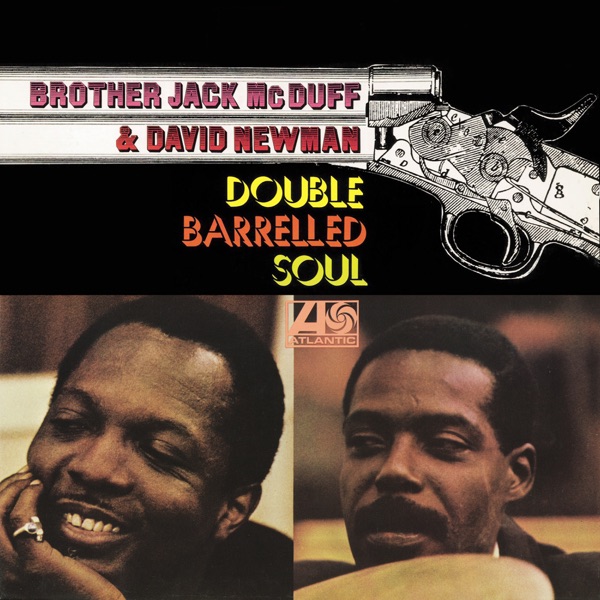
Double Barrelled Soul
1968
♫
Steppin' Out
1969
Down Home Style
Down Home Style
1969
Gin and Orange
Gin and Orange
1969
I Got a Woman
I Got a Woman
1969
♫
Moon Rappin'
1970
♫
To Seek a New Home
1970
♫
On With It!
1971

Collaborations

Live on Youtube

Explore Further

Selected connections
Organist, United States
Jimmy Smith
The organist who started the whole soul jazz organ wave McDuff built his own version of.
Explore →
Album, 1963
Live!
The clearest document of what a McDuff club date actually felt like.
Explore →
Guitarist, United States
Grant Green
Another regular on the organ-combo circuit, with a similarly bluesy, economical style.
Explore →

Who's playing
Listen next
Recording Info
Track listing
Musicians
Further Reading
Read more

Where next?

More by this artist

Albums with the same musicians

From the same era

Similar artists

inside the sleeve
Growing
Jazz, explained without pretension.
Read · Follow the connections · Press play
Right now: 7,100+ albums · 440+ artists
Start here
New to jazz? These artists are good places to start.
Loading…
Explore
Nine records worth getting lost in.
Born today
Album of the day
A landmark record, every day.
Read
  • Loading…
Article archive →
Recently added
Purpose
Inside the Sleeve is your companion on a journey through jazz — not a textbook, but something closer to a knowledgeable friend sitting next to you while you listen. Read about an artist, press play, follow a connection, discover an album you didn't know you needed.
Suggestions
Read

Articles

Essays, guides, and lists about jazz and the records that matter.

Loading…

Genre

Key Artists
Further Reading

Essential Albums

Related Genres

In This Genre

About

Inside the Sleeve

Work in progress

Inside the Sleeve grows continuously — new artists and albums are added, essays refined, as visitors explore and our editors follow up on what they find. Content, features, and design are still evolving; use the Report error button on any page to flag something that seems off.

Content

Every artist, album, and release date on Inside the Sleeve is real — verified against trusted sources including MusicBrainz and Wikipedia. We don't invent discographies or fabricate records. AI compiles that verified information into readable prose — essays on artists, albums, and the music itself. We can't manually review every essay before publishing, but every reported error is checked by a human editor.

Inside the Sleeve is not a review site. We're not here to rate or rank — we're here to guide you in. Where an album stands out, we'll say so. Where an artist changed everything, you'll know why. But we won't tear anything down. Jazz history is complex and sources sometimes disagree — if you spot something that seems off, please report it.

Streaming

Inside the Sleeve links to Spotify and Apple Music so you can listen while you read. These are not affiliate links. For Spotify, links open a search on open.spotify.com — we do not have direct links to specific recordings. For Apple Music, direct links are used where available, otherwise a search is opened.

Your choice of streaming service is stored locally in your browser only. It is never sent to our servers.

We're working on deeper Spotify integration, including direct links to specific recordings.

Privacy

Inside the Sleeve does not collect personal data and does not use cookies. We count page visits anonymously using a self-hosted analytics tool — no personal identifiers are stored, and the data never leaves our own server. The only preference stored on your device is your streaming service choice, saved locally in your browser and never transmitted.

When you submit a suggestion or error report, the text you write is stored in our database. No name or email is required or collected unless you choose to provide one.

Third-party services

Spotify and Apple Music are independent services with their own terms of use and privacy policies. Inside the Sleeve is not affiliated with or endorsed by either company.

Support

Inside the Sleeve is free and ad-free. If you enjoy it, a coffee helps cover server costs and keeps the project going.

Amazon

Some book recommendations on Inside the Sleeve link to Amazon. Buying through these links costs you nothing extra — but Amazon pays us a small commission, which goes directly towards keeping the site running. It's a simple way to support the project if you were going to buy the book anyway.

As an Amazon Associate, Inside the Sleeve earns from qualifying purchases.

Questions or feedback? Use the suggestion box on the front page.

Inside the Sleeve — A guide for those who want to go beyond the obvious About & Privacy