Where do you listen?
Choose your streaming service
inside the sleeve
Loading…
inside the sleeveITS
⌕
Read About
Flute · USA · Jazz-Funk / Soul Jazz

Bobbi
Humphrey

Start here Fancy Dancer (1975) →
1950 - present, USA

Bobbi Humphrey made the flute sound like it belonged in a club, not a concert hall — warm, funky, and completely comfortable sitting next to a wah-wah bass. She came up through the Blue Note roster in the early 1970s and became one of the label's best-selling artists of that era, which surprises people who only know Blue Note for hard bop. Her records are the kind of thing that DJs and crate-diggers have been looping for decades without always knowing whose name is on the cover.

Jazz FusionSoul Jazz
Bobbi Humphrey

Flute With Something To Prove

Humphrey grew up in Texas and studied seriously — she was the first African American woman to perform at the Dallas Symphony — but the music she made her name with wasn't orchestral. She moved to New York in the early 1970s, fell in with the Blue Note scene just as the label was pivoting hard toward funk and soul, and found a collaborator in Larry Mizell whose production instincts were exactly right for what she was doing. The Mizell brothers brought in lush strings, syncopated grooves, and pop-leaning arrangements that some jazz purists found too slick. Those people were wrong.

Her early Blue Note albums — Blacks and Blues (1973), Satin Doll (1974), Fancy Dancer (1975) — hold up remarkably well. The flute work is the thing, though. Humphrey had real technique but she never showed it off in ways that made you feel like you were supposed to be impressed. She played melodically, kept things tight, and understood that a great groove track needs space. The flute sits inside these records rather than on top of them, which is harder to pull off than it sounds.

The funk-jazz crossover scene she was working in had plenty of company — Herbie Hancock was doing something adjacent with Head Hunters (1973), and Donald Byrd was heading in a similar direction on the same label. But Humphrey's records have a slightly different feel, warmer and more vocal in character. She was also one of the few women leading her own sessions in that world, which wasn't something anyone made a big deal of at the time but is worth noting now just because it was genuinely unusual.

By the late 1970s the commercial landscape had shifted and her run of consistent releases slowed down. She kept performing and recording through the decades that followed, though nothing matched the concentrated run of quality she had from 1973 to 1977. That's not a knock — plenty of artists have a five-year window that defines them. In her case those records got sampled heavily by hip-hop producers in the 1990s and early 2000s, which brought a second wave of listeners to the originals.

If you're coming in fresh, start with Fancy Dancer (1975). It's the most fully realized of the Blue Note albums, the production is exactly right, and Humphrey's playing is confident without being showy. It sounds like a party where everybody in the room actually knows how to play. From there go back to Blacks and Blues (1973) and you'll hear where it all started to click.
Facts
Born1950, Marlin, Texas, USA
InstrumentFlute
Active1970s – present
Known forJazz-funk flute; Blue Note recordings with the Mizell Brothers
Connections
Larry MizellProducer and collaborator, Los Angeles
→
Donald ByrdLabel-mate and stylistic peer, Blue Note Records
→
Herbie HancockContemporary, jazz-funk crossover, New York
→
Read more

Discography

9 records
Passion Flute
Passion Flute
1971
Flute-In
Flute-In
1972
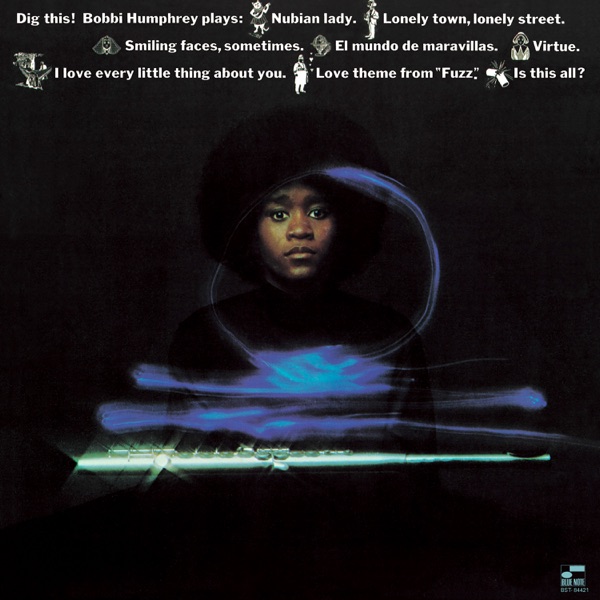
Dig This!
Dig This!
1972
Blacks and Blues
Blacks and Blues
1973
Satin Doll
Satin Doll
1974
Fancy Dancer
Fancy Dancer
1975
Tailor Made
Tailor Made
1977
Freestyle
Freestyle
1978
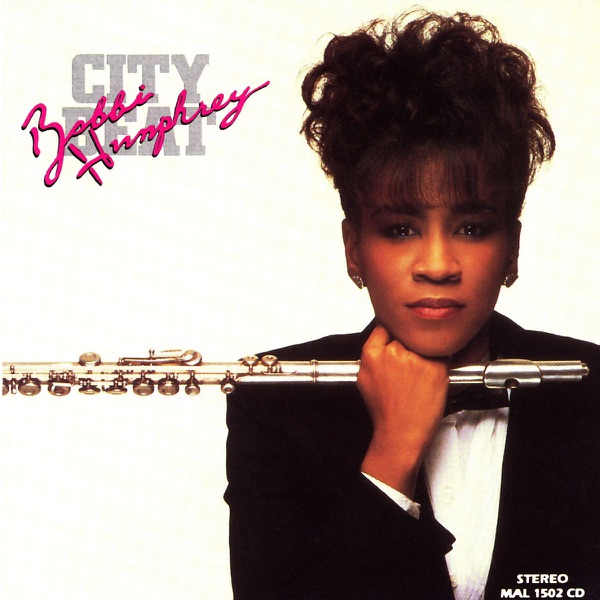
City Beat
City Beat
1988

Collaborations

Live on Youtube

Explore Further

Selected connections
Album, 1973
Head Hunters
Herbie Hancock's full pivot into funk — recorded in the same moment and at the same label family, it shows you the broader world Humphrey was working inside.
Explore →
Flutist, USA
Hubert Laws
A Texas-born flutist working at the same time with a more classical lean — comparing him with Humphrey shows you the range of what the instrument could do in jazz during this period.
Explore →

Who's playing
Listen next
Recording Info
Track listing
Musicians
Further Reading
Read more

Where next?

More by this artist

Albums with the same musicians

From the same era

Similar artists

inside the sleeve
Growing
Jazz, explained without pretension.
Read · Follow the connections · Press play
Right now: 7,100+ albums · 440+ artists
Start here
New to jazz? These artists are good places to start.
Loading…
Explore
Nine records worth getting lost in.
Born today
Album of the day
A landmark record, every day.
Read
  • Loading…
Article archive →
Recently added
Purpose
Inside the Sleeve is your companion on a journey through jazz — not a textbook, but something closer to a knowledgeable friend sitting next to you while you listen. Read about an artist, press play, follow a connection, discover an album you didn't know you needed.
Suggestions
Read

Articles

Essays, guides, and lists about jazz and the records that matter.

Loading…

Genre

Key Artists
Further Reading

Essential Albums

Related Genres

In This Genre

About

Inside the Sleeve

Work in progress

Inside the Sleeve grows continuously — new artists and albums are added, essays refined, as visitors explore and our editors follow up on what they find. Content, features, and design are still evolving; use the Report error button on any page to flag something that seems off.

Content

Every artist, album, and release date on Inside the Sleeve is real — verified against trusted sources including MusicBrainz and Wikipedia. We don't invent discographies or fabricate records. AI compiles that verified information into readable prose — essays on artists, albums, and the music itself. We can't manually review every essay before publishing, but every reported error is checked by a human editor.

Inside the Sleeve is not a review site. We're not here to rate or rank — we're here to guide you in. Where an album stands out, we'll say so. Where an artist changed everything, you'll know why. But we won't tear anything down. Jazz history is complex and sources sometimes disagree — if you spot something that seems off, please report it.

Streaming

Inside the Sleeve links to Spotify and Apple Music so you can listen while you read. These are not affiliate links. For Spotify, links open a search on open.spotify.com — we do not have direct links to specific recordings. For Apple Music, direct links are used where available, otherwise a search is opened.

Your choice of streaming service is stored locally in your browser only. It is never sent to our servers.

We're working on deeper Spotify integration, including direct links to specific recordings.

Privacy

Inside the Sleeve does not collect personal data and does not use cookies. We count page visits anonymously using a self-hosted analytics tool — no personal identifiers are stored, and the data never leaves our own server. The only preference stored on your device is your streaming service choice, saved locally in your browser and never transmitted.

When you submit a suggestion or error report, the text you write is stored in our database. No name or email is required or collected unless you choose to provide one.

Third-party services

Spotify and Apple Music are independent services with their own terms of use and privacy policies. Inside the Sleeve is not affiliated with or endorsed by either company.

Support

Inside the Sleeve is free and ad-free. If you enjoy it, a coffee helps cover server costs and keeps the project going.

Amazon

Some book recommendations on Inside the Sleeve link to Amazon. Buying through these links costs you nothing extra — but Amazon pays us a small commission, which goes directly towards keeping the site running. It's a simple way to support the project if you were going to buy the book anyway.

As an Amazon Associate, Inside the Sleeve earns from qualifying purchases.

Questions or feedback? Use the suggestion box on the front page.

Inside the Sleeve — A guide for those who want to go beyond the obvious About & Privacy