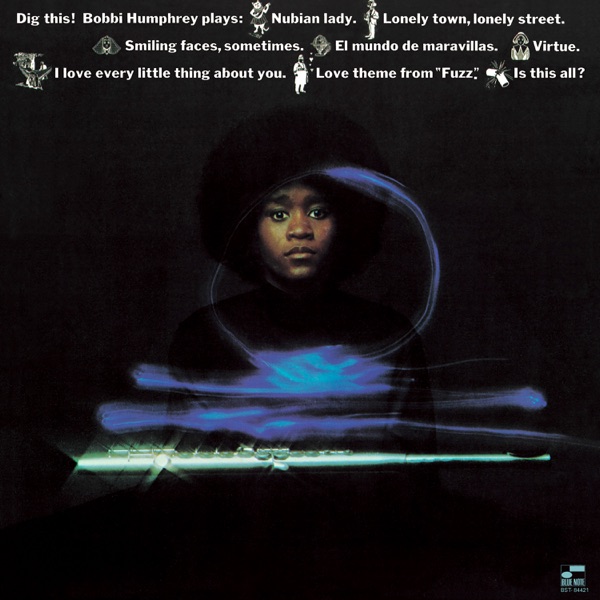
1974 · Album
Satin Doll
Recorded 1974 · Blue Note · Album Position: Fourth studio album

Disco Flute in the Mid-Seventies
Satin Doll trades the acoustic intimacy of Humphrey's earlier work for something brasher, funkier, and more dance-floor ready.
The first thing you hear on Satin Doll is groove—thick, syncopated, unapologetic. The flute sits inside arrangements that are locked into a disco and funk pocket, with strings and keyboards padding out a sound that feels designed for something other than the listening room. There's nothing wrong with that. Humphrey's flute still cuts through clearly, bright and conversational, but she's sharing space with a much fuller band now, one that's comfortable with wah-wah guitars, string stabs, and the kind of production gloss that was everywhere in 1974. It's a departure from her earlier Blue Note records, where the flute had more room to breathe solo-wise. Here, the tracks are tighter, more arranged, more intentional about their pop and funk appeal. Lea Antalin of DownBeat captured the shift plainly in a 1975 review, calling it a disco album and wishing for more extended flute solos—a fair point. The rhythm section is tight and the grooves are undeniably catchy, but there's less space for Humphrey to stretch out the way she did before. This is a record caught between the acoustic jazz world and the commercial soul-funk world, and it doesn't quite settle into either one completely. If you want to hear Humphrey playing to a more straight-ahead jazz audience, her earlier work will give you that. Satin Doll works best if you come to it on its own terms—as a mid-seventies funk record that happens to feature a flautist.
Who's playing
Wayne Tweedbass
Bobbi Humphreyflute
Don Prestonsynthesizer
Harvey Masondrums
Chuck Davisclavinet
Larry Mizellclavinet