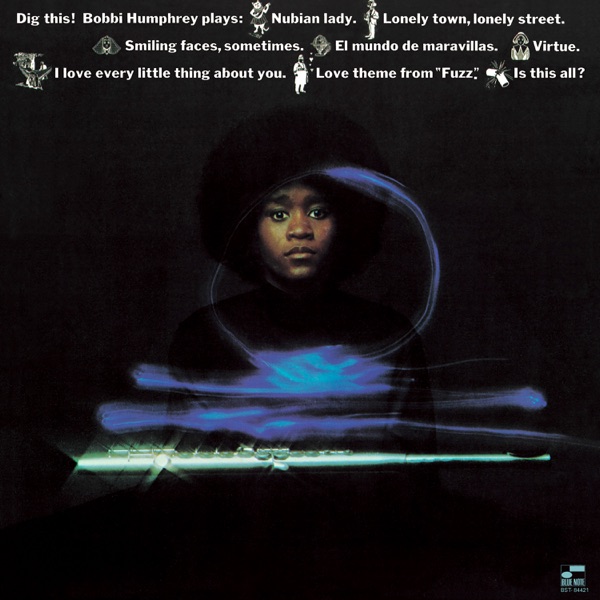
Soul-Jazz Flute at Full Heat
Humphrey's flute cuts through with urgency, riding grooves that refuse to settle.
Passion Flute hits immediately — Bobbi Humphrey's flute is front and center, warm but driving, playing lines that bend and shimmy over funk-rooted grooves. The rhythm section of David Metcen on bass and Buddy Williams on drums locks into a tight, propulsive pocket. This is soul-jazz and fusion territory, built on solid ground but with room for the flute to stretch and breathe. The album has a confident, almost celebratory energy throughout — Humphrey playing with real urgency, never settling into mere decoration.
This was Humphrey early in her recording career, after breaking ground as the first female instrumentalist signed to Blue Note. Passion Flute shows why that signing mattered. She plays with command and personality, bringing a singer's phrasing to an instrumental that could easily feel cold or technical in less capable hands. The funk and soul influences give the music a worldliness that straight bebop never would have. She's not trying to out-swing the men on tenor saxophone or trumpet — she's carving her own space, and the music breathes differently because of it.
This album sits squarely in the soul-jazz and fusion moment of early 1970s Blue Note, but it holds up because Humphrey's voice on the flute is distinctive and her taste for groove never overwhelms the musicianship. If you want to hear what that Blue Note signing represented, start here.
Who's playing