1969 · Album
Volunteered Slavery
Recorded 1968 (Newport Jazz Festival), July 1969 (studio sessions) · Atlantic
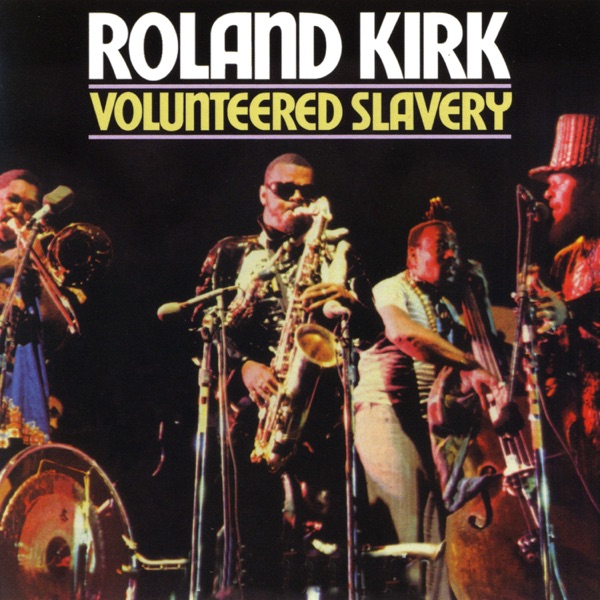
Kirk's Defiant Spirit Choir Speaks
Kirk mixed Newport's live fire with studio precision, proving the multi-instrumentalist could lead a full ensemble without losing his edge.
Volunteered Slavery arrived in 1969 as one of Kirk's most ambitious projects, and critics took notice immediately. AllMusic gave it 4.5 out of 5 stars, recognizing something special in how Kirk balanced raw live energy with carefully arranged studio work. The Penguin Guide rated it 3.5 out of 4, acknowledging the album's reach even if not every element landed equally. This was Kirk at full force—leading a genuine ensemble rather than anchoring a smaller group, a risk that paid off.
The album splices his 1968 Newport Jazz Festival performance with July 1969 studio sessions, and the contrast matters. The live material crackles with the spontaneous desperation Kirk brought to any stage; the studio cuts show him thinking bigger, working with a horn section and the "Roland Kirk Spirit Choir" to create something closer to orchestration. On record, you hear Kirk's tenor, stritch, and nose flute pushing through arrangements that don't diminish him—they give him something to push against. He's not showing off; he's making a point. The lineup included Dick Griffin and Charles McGhee among others, and they stay tight enough to support Kirk's ideas without getting in the way.
This sits between Kirk's early work and his later activism, capturing a moment when he was confident enough to expand his palette but still too restless to settle into comfort. It's not his most accessible record, and some listeners find the studio segments a touch heavy-handed compared to pure Kirk trio energy. But if you want to hear Kirk lead an actual band and make it swing, this is where to look.