1963 · Album
Reeds & Deeds
Recorded 1963 · Mercury Records · Produced by Not specified in available sources
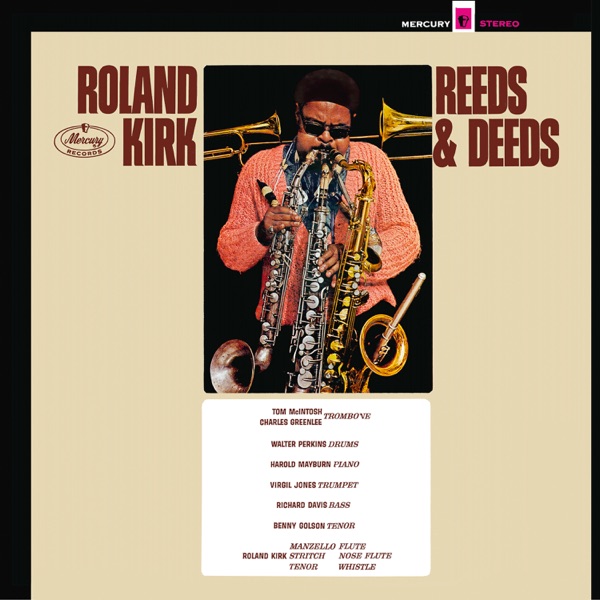
Kirk's Horn Conversations and Brass Colloquies
Kirk plays three saxophones at once, but the real conversation is between his reeds and a tight ensemble that knows how to listen.
Reeds & Deeds opens with warmth and chatter—Kirk's three saxophones weaving in and out of each other while the rhythm section locks tight underneath. It's a crowded bandstand sound, but not chaotic; there's room for everything. The horns breathe alongside him. Harold Mabern on piano and Richard Davis on bass anchor the date with the kind of unhurried swing that makes the ensemble sound like they've played together for years, even if they're meeting for the session.
Kirk was already known for his three-saxophone technique, but Reeds & Deeds catches him in a moment of genuine orchestral thinking. Arrangements by Benny Golson give each track shape and purpose—these aren't just vehicles for Kirk to show off, though his multi-reed facility is on full display. Tracks move between the propulsive and the introspective. Virgil Jones on trumpet and Charles Greenlee on trombone add brass color that keeps things from becoming a pure saxophone date. The ensemble playing is clean and purposeful throughout.
This sits early in Kirk's recorded career, before he became a more widely recognized figure. AllMusic's 4.5/5 rating captures it fairly: a strong session that documents an idiosyncratic talent before he fully claimed the spotlight. It's not his most famous record, but it's solid evidence of why people were paying attention. Kirk had something distinctive to offer, and here the band—the reeds and the horns alike—are giving him room to offer it.