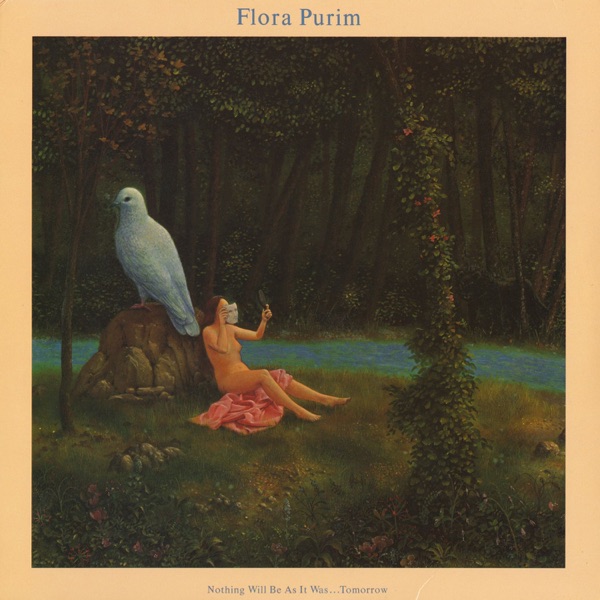
Flora's Voice Floating Between Worlds
Purim's voice moves through fusion arrangements with an ease that makes complexity sound like conversation.
Nothing Will Be As It Was...Tomorrow opens with Purim's voice layered and spacious, floating over electric piano and gentle percussion—a sound caught between Brazil and American jazz fusion, between structure and spontaneity. The album feels less like a showcase for technical display and more like a series of intimate conversations, her wordless vocals and occasional lyrical passages creating texture rather than dominating the mix. Horns drift in and out; synthesizers shimmer underneath. It's unhurried, almost contemplative in places, which sets it apart from the more propulsive fusion records of the mid-seventies.
This comes during Purim's solo career, built on the foundation she'd established through her work with Chick Corea and Stanley Clarke in Return to Forever. By this point she had the freedom to explore a more personal vision—less about speed and virtuosity, more about mood and vocal layering. The album draws on her Brazilian roots without ever becoming a samba record, instead treating Brazilian rhythmic sensibility as one color among many. Her approach to phrasing and improvisation feels rooted in the singers she admired, yet entirely her own.
Nothing Will Be As It Was...Tomorrow never became a canonical jazz record, and it doesn't have the immediate appeal of her fusion work with Return to Forever. But it reveals something the group records sometimes obscure: Purim's genuine gifts as a bandleader and arranger, her instinct for space, and her refusal to simply sing over what others had constructed. It's a record for listeners who came to her voice first and want to hear how she shapes an entire album around it.
Where next?
More by Flora Purim
All 27 albums →


