1993 · Album
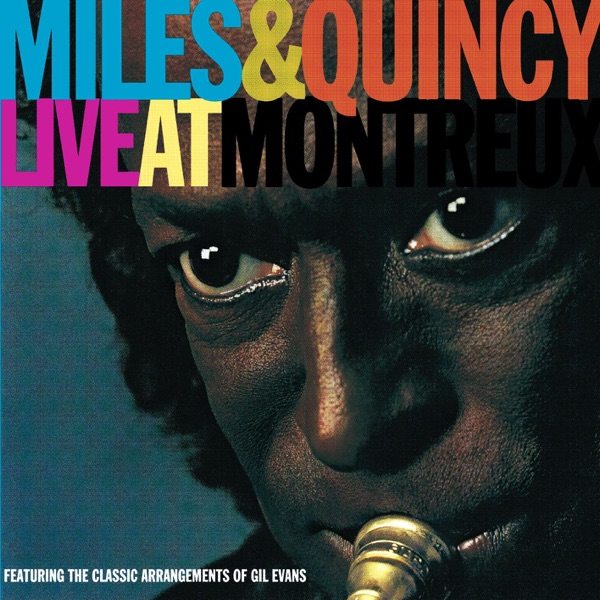
Miles & Quincy Live at Montreux
Recorded 1991 Montreux Jazz Festival · Warner Bros. Records · Produced by Not specified in source material
Two Masters at the Montreux Moment
Davis and Jones together prove that late-career collaborations between equals can still surprise.
By 1991, Miles Davis and Quincy Jones had spent decades in separate orbits. Davis was still playing, still searching for the next sound, while Jones had become a titan of production and arrangement—more likely to be heard behind the scenes than at the front of a bandstand. When they met at the Montreux Jazz Festival that year, the pairing felt like a rare alignment. This wasn't a nostalgia tour or a contractual obligation; it was two major figures, each at a different stage of their powers, deciding to share a stage and see what happened.
What happened was a live recording that captures something genuine about collaboration between unequal partners. Jones brought orchestral sophistication and compositional depth—his hand in the arrangements gives the music shape and purpose. Davis brought what he always brought: curiosity and refusal to repeat himself. He doesn't coast through these performances. He's listening, responding, pushing against the structures Jones has built. The interplay between them is the real subject here, not individual virtuosity or a greatest-hits parade.
This is a record for people who've lived with Davis's music and want to hear him in conversation with someone as accomplished and opinionated as himself. It's not an entry point—you'd be better served starting with Kind of Blue (1959) or Bitches Brew (1970)—but it has the feel of something earned: two figures acknowledging each other's work by actually doing work together. The music feels alert because both men clearly have something to prove, even this late in their careers.
Who's playing
Carles Benaventbass
Reiner Erbbassoon
Christian Rabebassoon
Mike Richmondbass
Dave Taylorbass trombone
George Gruntzpiano
Jerry Bergonzitenor saxophone
Alex Fosteralto saxophone
Kenny Garrettalto saxophone
Christian Gavilletbaritone saxophone
Howard Johnsonbaritone saxophone
Roger Rosenbergbaritone saxophone
Miles Davistrumpet
Miles Evanstrumpet
Lew Solofftrumpet
Roland Dahindentrombone
Conrad Herwigtrombone
Tom “Bones” Malonetrombone
George Adamsflute
Julian Cawdryalto flute
Hanspeter Frehneralto flute
Anne O'Brienflute
John Rileydrums
Grady Tatedrums
Kenwood Dennardpercussion
Benny Baileyflugelhorn
Dave Bargeroneuphonium
Alex BrofskyFrench horn
Delmar Brownkeyboard
John ClarkFrench horn
John D'earthflugelhorn
Xavier Dussoboe
Gil Goldsteinkeyboard
Bob Malachclarinet
Earl McIntyreeuphonium
Claudio PontiggiaFrench horn
Wallace Roneyflugelhorn
Ack van Rooyenflugelhorn
Xenia Schindlerharp
Larry Schneiderclarinet
Manfred Schoofflugelhorn
Dave Seghezzooboe
Marvin Stammflugelhorn
Tom VarnerFrench horn
Jack Walrathflugelhorn
Michel Weberclarinet
Judith Wenzikeroboe
Tilmann Zahnoboe
Where next?
More by Quincy Jones
All 40 albums →


The musicians on this record
Their own records, close in time