1969 · Album
Left & Right
Recorded 1969 · Atlantic · Produced by Not specified in available documentation
Kirk's Orchestral Reach and Return
Kirk stretched beyond his trio comfort zone into full orchestration, proving he could command any ensemble.
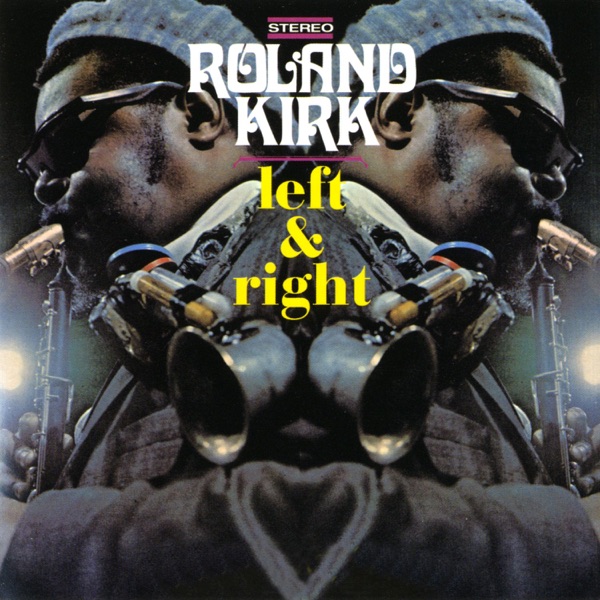
Left & Right arrived in 1969 when Kirk was at full creative confidence, and AllMusic reviewer later recognized it as one of his strongest efforts, rating it 4.5 out of 5. The album splits itself cleanly: one side features Kirk in smaller group settings with Jim Buffington, Julius Watkins, Frank Wess, and drummer Roy Haynes, while the other showcases him fronting a full orchestra arranged by Gil Fuller, with strings and brass that would've seemed incongruous for Kirk five years earlier. The contrast isn't gimmicky—Kirk moves between contexts without strain, his tenor and manzello work equally at home in a swinging quartet or threading through lush orchestration.
What makes this record distinct from Kirk's other work is the orchestration itself. Gil Fuller's arrangements never bury Kirk; instead, they frame him, creating space for his multitone technique and his ability to shift moods without warning. The extended tracks on the orchestral side give you a sense of Kirk as composer, not just player, and tracks like the suite featuring Alice Coltrane on organ show how Kirk could curate genuine ensemble chemistry. This isn't Kirk playing over strings—it's Kirk playing with them, and the difference matters.
The album didn't reshape Kirk's reputation, but it showed a musician uninterested in staying in one lane. By 1969, his freakish ability on multiple horns was already known; this record demonstrated that the strength lay not in novelty but in musicality that transcended instrumentation. It remains a solid entry point for listeners wanting Kirk in a more orchestral setting, though his trio records remain his core foundation.