Kirk's Brass and Reeds Unleashed
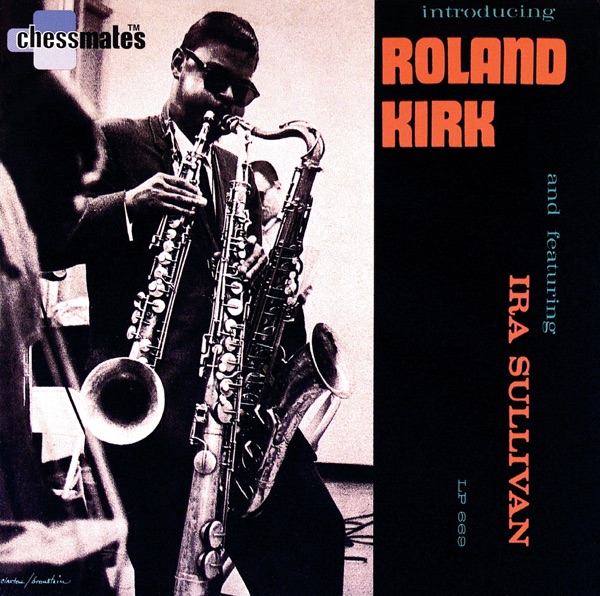
Kirk plays three saxophones at once, switching between them with the ease of a man possessed by multiple musical voices.
Introducing Roland Kirk arrived quietly in late 1960, a second album that didn't immediately register as a statement. But AllMusic's later 4.5-star rating suggests the record found its audience over time, proving that Kirk's virtuosity and sheer musical appetite demanded attention eventually. This is Kirk early in his career, still establishing himself as more than a novelty act, still proving that playing multiple horns simultaneously wasn't a gimmick but a genuine extension of his musical thinking.
The band here is tight and conversational. Kirk works with Ira Sullivan, William Burton, Donald Garrett, and Sonny Brown, and the ensemble has real rapport—no sense of musicians playing around a spectacle. Kirk moves between tenor, soprano, and a stritch (a hybrid saxophone-clarinet) with fluidity, sometimes stacking them, sometimes trading leads. The rhythm section doesn't back away from his intensity; they meet it. This is muscular hard bop, not experimental showboating. Tracks breathe. Solos develop logically rather than dazzle for effect.
What makes this record compelling is its refusal to apologize for Kirk's gifts. He's not playing three horns because he can; he's doing it because he hears three voices at once. The Penguin Guide gave it three stars, which is honest—solid and worth hearing, but not transcendent. For newcomers to Kirk, The Inflated Tear (1968) might hit harder, but this one shows the foundation: a musician in control of his own voice, plural and singular at once.