Where do you listen?
Choose your streaming service
inside the sleeve
Loading…
inside the sleeveITS
⌕
Read About
Trumpet - USA - Post-Bop / Neoclassical Jazz

Wynton Marsalis
Septet

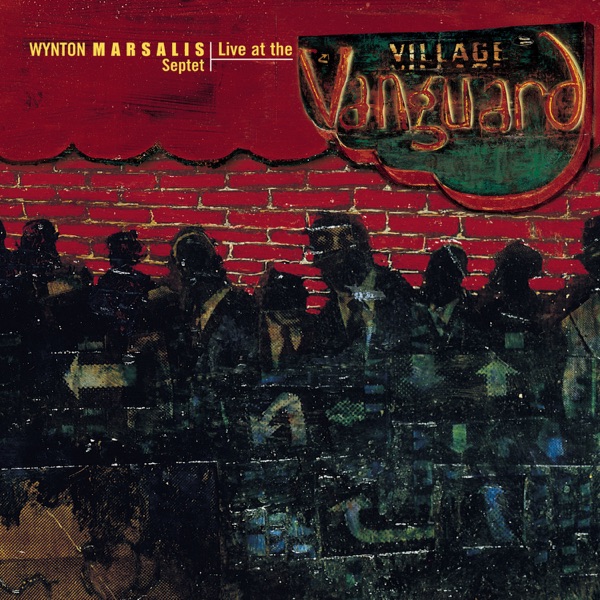
Start here Live at the Village Vanguard (1999) →
1988 - present, New Orleans / New York, USA

The Wynton Marsalis Septet is the working band through which Marsalis has done his most sustained and serious musical thinking — a vehicle built not for spectacle but for the long game of repertoire and ensemble development. Where the solo recordings often get the press, the septet is where the ideas get stress-tested night after night. It is a band with a specific philosophy: that jazz has a deep tradition worth inhabiting fully before you start dismantling it.

Post-Bop
♫

Playing It Forward, Not Safe

Before you press play on anything from the Wynton Marsalis Septet, it helps to know what you're walking into. This is a band that takes the African American musical tradition — from New Orleans parade music through hard bop and modal jazz — and treats it as living material rather than museum artifact. Marsalis has been accused of being conservative, and there's a real debate worth having there, but the music itself is rarely timid. The septet plays with precision and swing and a kind of collective seriousness that you don't always find in bands assembled around a single star.

The group's core sound is rooted in the post-bop era — think the mid-1960s Miles Davis quintet as a reference point, but with a much more explicit connection to swing rhythm and blues-soaked melody. Marsalis writes for the full ensemble, not just as a backdrop for solos, and the horn voicings are dense and carefully considered. When the band locks in, there's a richness to the texture that rewards repeated listening. You start to notice the countermelodies, the way the rhythm section pushes without rushing, the way space gets used.

Over the years, players like Wycliffe Gordon, Todd Williams, and Marcus Roberts passed through or worked closely alongside the group, and each brought a different weight to the sound. Marcus Roberts in particular brought a left-hand authority and blues depth to the piano chair that gave the early recordings some of their most distinctive moments. The band was never static in personnel, but the aesthetic stayed consistent — and that consistency is both its strength and the thing that some listeners find frustrating.

The criticism that follows Marsalis and this band is worth engaging honestly. Some feel that the reverence for tradition becomes its own constraint — that by insisting jazz must swing, must connect to blues, must honor its elders, the music occasionally feels more like a demonstration than an exploration. That's a fair observation at times. But the counterargument is audible on recordings like Live at the Village Vanguard (1999), where the band sounds loose and genuinely dangerous in a way the studio albums don't always capture. Live, the rules feel less like walls and more like a game the musicians are playing against each other.

What the septet has given the wider jazz world, regardless of where you fall in the aesthetic argument, is a model of what a working band can look like — musicians who know each other deeply, who have internalized a shared language, and who can communicate across a stage without a glance. That kind of ensemble trust takes years to build and is increasingly rare. Whether you end up loving this music or finding it too contained, you're hearing something that was made with real conviction and real craft.
Facts
BornWynton Marsalis: October 18, 1961, New Orleans, Louisiana, USA
InstrumentTrumpet (Marsalis); septet includes saxophones, trombone, piano, bass, drums
Active1988 - present
Known forNeoclassical post-bop, long-form composition, ensemble discipline, Lincoln Center Jazz Orchestra leadership
Connections
Marcus RobertsPiano, early septet recordings, New Orleans
→
Wycliffe GordonTrombone, longtime collaborator, New York
→
Branford MarsalisBrother, saxophone, early creative partnership, New York
→
Read more

Discography

8 records
♫
The Marciac Suite
1990
Blue Interlude
Blue Interlude
1992
Citi Movement
Citi Movement
1993
In This House, On This Morning
1994
Live In Swing Town
Live In Swing Town
1995
Live at the Village Vanguard
1999
Here...Now
Here...Now
2001
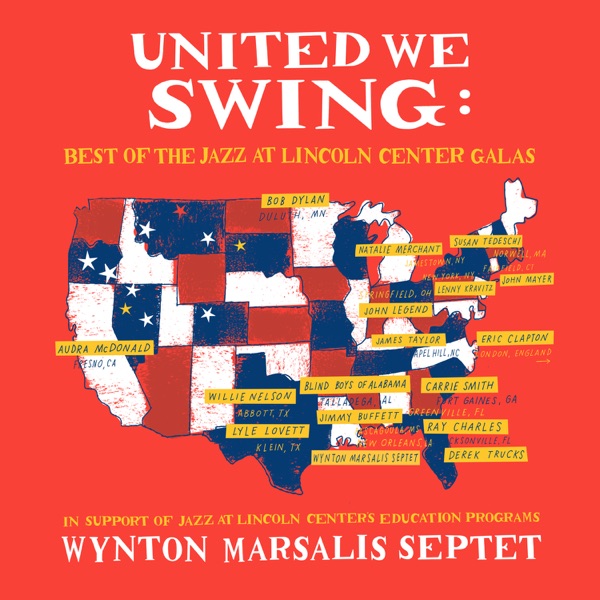
United We Swing
United We Swing
2018

Collaborations

Live on Youtube

Explore Further

Selected connections
Trumpeter, USA
Freddie Hubbard
One of the main voices Marsalis absorbed and argued with — harder-edged post-bop trumpet at its most direct.
Explore →
Album, 1999
Live at the Village Vanguard
The septet caught in the room where jazz was made — looser and more alive than the studio work suggests they could be.
Explore →

Who's playing
Listen next
Recording Info
Track listing
Musicians
Further Reading
Read more

Where next?

More by this artist

Albums with the same musicians

From the same era

Similar artists

inside the sleeve
Growing
Jazz, explained without pretension.
Read · Follow the connections · Press play
Right now: 7,100+ albums · 440+ artists
Start here
New to jazz? These artists are good places to start.
Loading…
Explore
Nine records worth getting lost in.
Born today
Album of the day
A landmark record, every day.
Read
  • Loading…
Article archive →
Recently added
Purpose
Inside the Sleeve is your companion on a journey through jazz — not a textbook, but something closer to a knowledgeable friend sitting next to you while you listen. Read about an artist, press play, follow a connection, discover an album you didn't know you needed.
Suggestions
Read

Articles

Essays, guides, and lists about jazz and the records that matter.

Loading…

Genre

Key Artists
Further Reading

Essential Albums

Related Genres

In This Genre

About

Inside the Sleeve

Work in progress

Inside the Sleeve grows continuously — new artists and albums are added, essays refined, as visitors explore and our editors follow up on what they find. Content, features, and design are still evolving; use the Report error button on any page to flag something that seems off.

Content

Every artist, album, and release date on Inside the Sleeve is real — verified against trusted sources including MusicBrainz and Wikipedia. We don't invent discographies or fabricate records. AI compiles that verified information into readable prose — essays on artists, albums, and the music itself. We can't manually review every essay before publishing, but every reported error is checked by a human editor.

Inside the Sleeve is not a review site. We're not here to rate or rank — we're here to guide you in. Where an album stands out, we'll say so. Where an artist changed everything, you'll know why. But we won't tear anything down. Jazz history is complex and sources sometimes disagree — if you spot something that seems off, please report it.

Streaming

Inside the Sleeve links to Spotify and Apple Music so you can listen while you read. These are not affiliate links. For Spotify, links open a search on open.spotify.com — we do not have direct links to specific recordings. For Apple Music, direct links are used where available, otherwise a search is opened.

Your choice of streaming service is stored locally in your browser only. It is never sent to our servers.

We're working on deeper Spotify integration, including direct links to specific recordings.

Privacy

Inside the Sleeve does not collect personal data and does not use cookies. We count page visits anonymously using a self-hosted analytics tool — no personal identifiers are stored, and the data never leaves our own server. The only preference stored on your device is your streaming service choice, saved locally in your browser and never transmitted.

When you submit a suggestion or error report, the text you write is stored in our database. No name or email is required or collected unless you choose to provide one.

Third-party services

Spotify and Apple Music are independent services with their own terms of use and privacy policies. Inside the Sleeve is not affiliated with or endorsed by either company.

Support

Inside the Sleeve is free and ad-free. If you enjoy it, a coffee helps cover server costs and keeps the project going.

Amazon

Some book recommendations on Inside the Sleeve link to Amazon. Buying through these links costs you nothing extra — but Amazon pays us a small commission, which goes directly towards keeping the site running. It's a simple way to support the project if you were going to buy the book anyway.

As an Amazon Associate, Inside the Sleeve earns from qualifying purchases.

Questions or feedback? Use the suggestion box on the front page.

Inside the Sleeve — A guide for those who want to go beyond the obvious About & Privacy