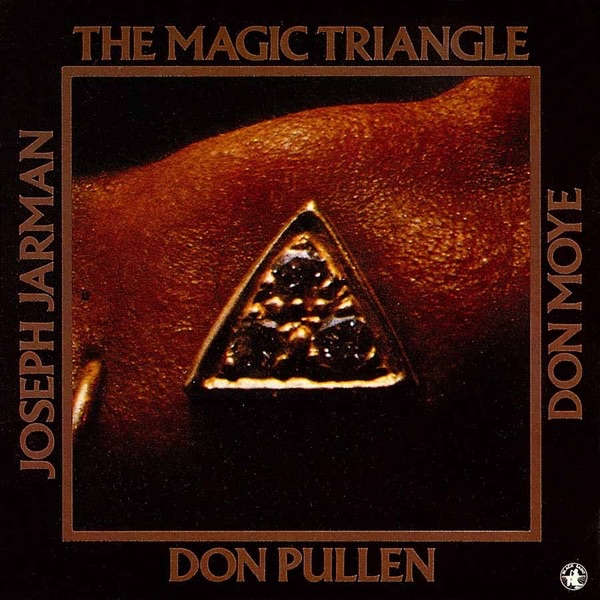
Three Voices Collide in Real Time
Spontaneous interplay between Jarman's unpredictable horns and Pullen's powerful piano defines this open-eared collaboration.
Don Pullen was finding his voice in the late 1970s, moving beyond sideman work toward something more assertive and personal. The Magic Triangle (1979) captures him at a crucial moment—leading a session that demanded equal partnership rather than support. With Joseph Jarman on reeds and winds and Famoudou Don Moye on congas, Pullen created something restless and ungoverned, the opposite of the locked-in grooves he would pursue in later years.
The album's four group originals stay close to composed themes but treat them as starting points, not destinations. Jarman brings controlled chaos—his horn work veers between melody and texture, often abandoning conventional phrasing for timbral exploration. Moye's congas drive and color the music without locking into steady time, leaving space for Pullen's piano to move fluidly between support and statement. The interplay is genuine risk; these three players are listening hard and reacting, not executing a plan.
AllMusic reviewer Scott Yanow noted the music was most noteworthy for the unpredictable dialogue between Jarman and Pullen, and flagged it for very open-eared listeners. That qualifier matters—this isn't welcoming or smooth. But for anyone tracking Pullen's evolution from mid-career restlessness toward the funky, soulful direction he'd claim in the 1980s, this session shows a pianist unafraid of abstraction and equally unafraid of joy. It's a strong record, not a comfortable one.
Who's playing
Where next?
More by Don Pullen
All 14 albums →
The musicians on this record
Their own records, close in time



