1938 · Album
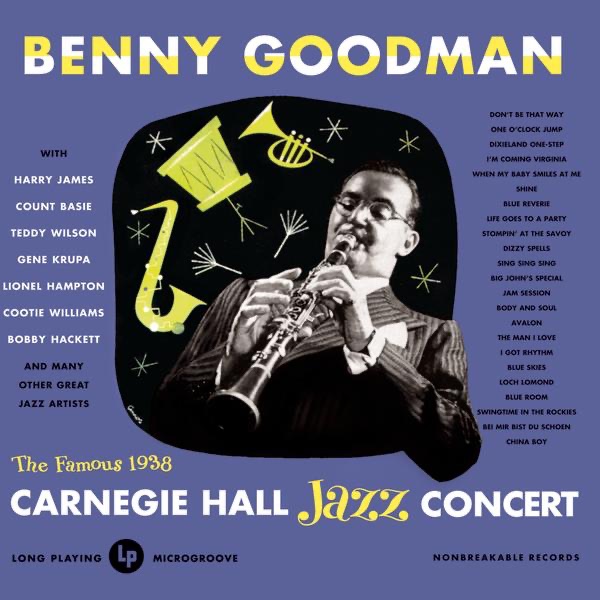
The Famous 1938 Carnegie Hall Jazz Concert Vol.3
Recorded January 16, 1938 · Columbia Records (original release) · Venue: Carnegie Hall, New York City
Goodman's Orchestra in Full Swing
The band hits hard and clean, every section locked in, the room alive with precision and joy.
From the first notes, you hear a large orchestra firing on all cylinders — brass punching through with clarity, reeds weaving underneath, rhythm section driving forward with absolute certainty. The tempo rarely lets up. This is Goodman's orchestra at Carnegie Hall, and the energy in the room is unmistakable: the audience is right there with them, responding to each solo, each ensemble phrase, each moment of tightness. The sound is big and purposeful, nothing small or introspective about it.
By 1938, Goodman had already established himself as the bandleader who could make swing sound both accessible and musically serious. This concert represents him at the height of his powers — the orchestra was well-rehearsed, the arrangements were strong, and the soloist rotation kept things fresh across multiple sets. The Famous 1938 Carnegie Hall Jazz Concert volumes captured what was essentially a history-making night: one of the first times a jazz ensemble had filled that hall with what was still a relatively young art form. The playing is exuberant without being sloppy, professional without being stiff.
What matters here is the straightforward quality of the musicianship. The orchestra swings consistently, the soloists have room to stretch, and the recordings capture the live sound with decent fidelity for the era. If you want to hear Goodman leading a full orchestra in peak form, moving through a full evening of tunes, this is exactly that. Not a studio album smoothed and perfected in the control room — an actual concert, with the messiness and immediacy that brings.