1938 · Album
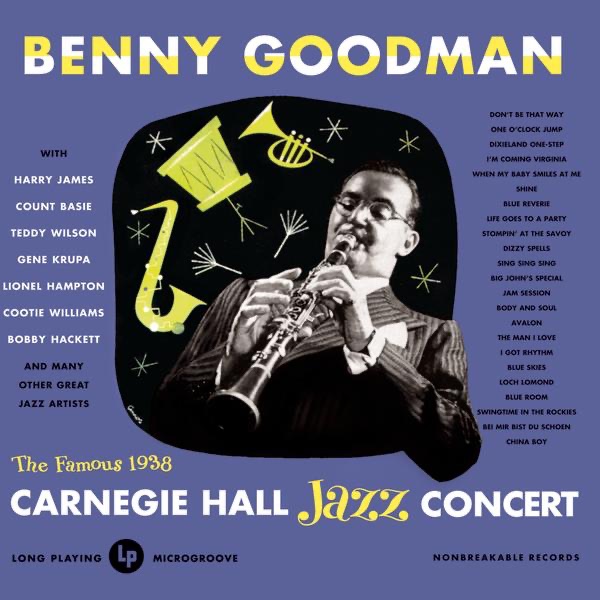
The Famous 1938 Carnegie Hall Jazz Concert
Recorded January 16, 1938 at Carnegie Hall, New York City · Columbia Records (catalogue SL-160; first issued 1950) · Produced by Original producer not specified; 1999 reissue mastered by Phil Schaap
When Jazz Walked Into the Room
The sound of a big band in full swing, captured alive, rough edges and all—this is the real thing.
From the first notes, you hear the room itself. It's January 1938 at Carnegie Hall, and there's an energy in the air that the recording preserves—not cleaned up, not prettified, but present. The brass section cuts through with real force. The reeds answer back. There's a looseness to it, a sense that something important is happening and everyone in the band knows it. The tempos move, sometimes urgent, sometimes settling into a groove that lets the soloists breathe. You can hear the audience too, which matters. This wasn't a studio session. This was a premiere, a moment when swing music was being presented to a venue and an audience that had never quite seen it before.
The Benny Goodman orchestra plays with the confidence of musicians at their peak, and the recording captures that clarity even through the surface noise that comes with the source material. When digital reissues arrived in the 1980s and 1990s, the 1999 version became the version to own—AllMusic gave it a perfect five stars, and for good reason. Reissue producer Phil Schaap tracked down the original acetates and restored the music with real care, preserving the ambience and power of the original performance while cleaning up enough to let you hear what's actually happening.
This matters historically. The concert itself was described as jazz's "coming out" party to the world of respectable music, and the album proved it. Not because it was revolutionary—Goodman's band was already playing this music brilliantly—but because it said that jazz belonged in Carnegie Hall, and that nobody could pretend otherwise after this night. For anyone curious about why swing music mattered, or what a big band actually sounded like when it was working at its best, this is essential listening.
Who's playing
Bobby Hackettsolo
Where next?
More by Benny Goodman
All 61 albums →