
Jan Garbarek's Wind Reshapes Rypdal's Guitar Sound
Garbarek's saxophone and flute work transforms what could have been a guitar-dominated session into something genuinely collective.
Terje Rypdal's self-titled album stands out early in his career partly because of what Jan Garbarek brings to it. Where Rypdal's guitar might have dominated the space, Garbarek's woodwind playing — moving between soprano saxophone and flute — creates a conversation rather than a showcase. His tone is warm and probing, neither aggressive nor decorative, which matters because Rypdal's approach to the guitar is already complex enough. The rhythm section of Arild Andersen on bass and Jon Christensen on percussion keeps things open and spacious, never pushing, which gives Garbarek room to breathe and Rypdal room to explore without competition.
What makes this record work is restraint. Garbarek doesn't overshadow; he contextualizes. His phrases often come in response to something Rypdal has tried, or he'll lay out entirely and let the guitar have the moment. This kind of listening — knowing when not to play — shapes the album's whole feel. The interplay between Rypdal's searching, sometimes angular guitar lines and Garbarek's more lyrical, flowing saxophone creates a genuine tension that pulls you back in on repeated listens.
This isn't Rypdal's most celebrated record in his later catalog, and it's not the obvious starting point for his work. But it's valuable precisely because it shows him before he became the distinctive voice everyone knows — still testing things out, still learning how to work with other musicians of genuine presence. Garbarek's involvement kept this from becoming a one-man demonstration of technique.
Who's playing
Arild Andersenbass
Bjørnar Andresenbass
Bobo Stensonelectric piano
Tom Halversenelectric piano
Jon Christensenpercussion
Ekkehard Fintlwind instruments
Jan Garbarekwoodwind
Where next?
More by Terje Rypdal
All 37 albums →


The musicians on this record
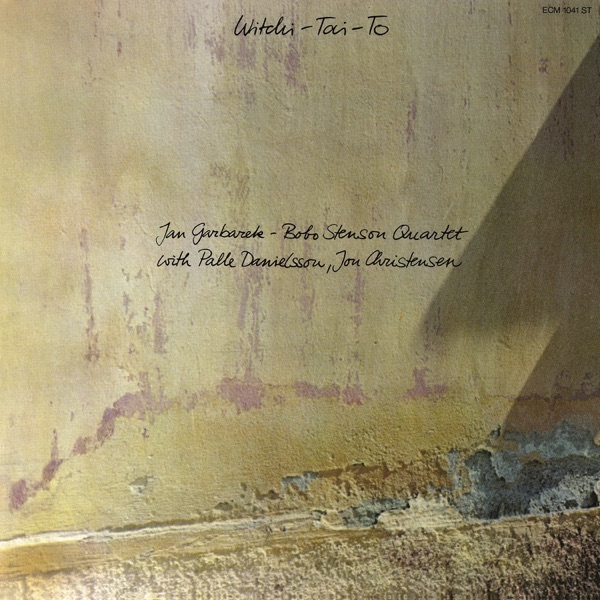
Sart 1971
Bobo Stenson
plays electric piano here
plays electric piano here
Witchi-Tai-to 1973
Jan Garbarek
plays woodwind here
plays woodwind here

A Molde Concert 1982
Arild Andersen
plays bass here
plays bass here
♫
Personal Mountains 1989
Jon Christensen
plays percussion here
plays percussion here


