1956 · Album
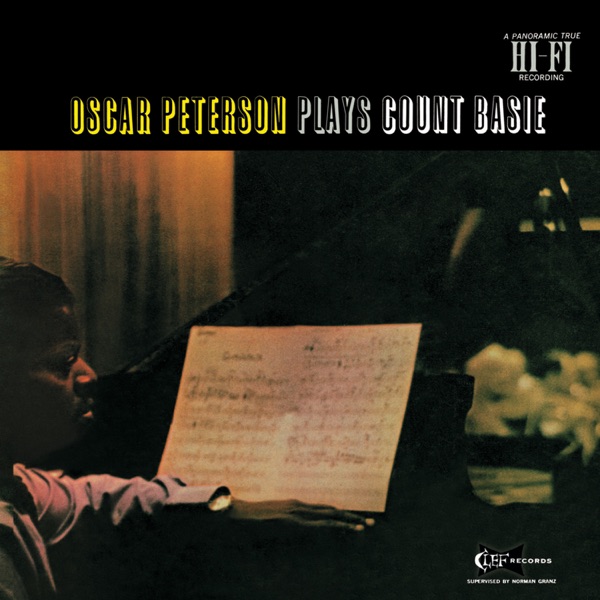
Oscar Peterson Plays Count Basie
Recorded 1959 · Verve Records · Produced by Norman Granz
Two Titans Trading Conversations
Peterson channels Basie's spirit while insisting on his own virtuosic voice throughout.
Oscar Peterson didn't need to prove anything by the time he made this record. He was already one of the most technically accomplished pianists in jazz, known for his speed, his harmonic sophistication, and his ability to swing harder than almost anyone else. But Oscar Peterson Plays Count Basie (1959) isn't about proving anything—it's about conversation. Peterson takes some of the essential Basie numbers and reimagines them as solo piano statements, which means he's essentially playing both sides of the exchange: the leader's vision and his own response to it.
What makes this work is that Peterson actually sounds like he's thinking about Basie's arrangements rather than just running through showpiece versions of famous tunes. There's restraint here alongside the fireworks. He'll play a melody straight enough to honor it, then break into those trademark left-hand figures and rippling runs that were his signature. The tempos vary—some tracks feel almost contemplative, giving you space to hear the song's bones, while others turn into genuine showcases where his fingers become a blur. The whole thing hangs together because Peterson never forgets that Basie was about swing first, flash second.
This is a solid middle-period Peterson record, the kind that doesn't get mentioned in the same breath as his most celebrated work, but it holds up surprisingly well. It's not essential like his best trio recordings, but it's far from a side project or a cash-grab tribute. If you're already familiar with Peterson and want to hear him engage directly with another master's vocabulary, this is worth your time. If you're new to him, start with his trio work first—Night and the City (1957) is a better entry point—then come back here once you know what makes him special.