1982 · Album
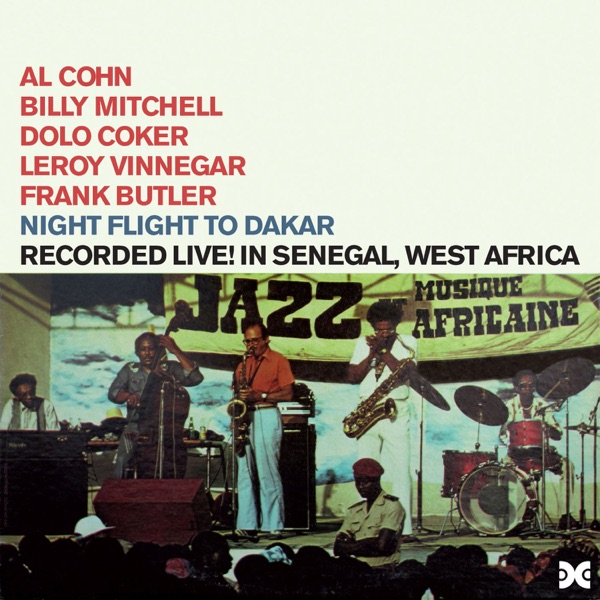
Night Flight to Dakar
Recorded 1980, Dakar · Xanadu Records · Personnel: Al Cohn and Billy Mitchell (saxophones), Dolo Coker (piano), Leroy Vinnegar (bass), Frank Butler (drums)
Dolo Coker's Steady Hand on an African Journey
Five players landing in Dakar with no rehearsal, playing like they'd known each other for years.
What makes Night Flight to Dakar (1980) work is Dolo Coker. The pianist anchors every track with the kind of understated authority that doesn't announce itself. He's not showboating or chasing complexity — he's building the house that everyone else plays in. When Al Cohn and Billy Mitchell trade solos over the blues, Coker's comping is conversational, never intrusive, always there. On the ballads he's genuinely lyrical without sentimentality. This was a pickup session in Dakar with musicians who hadn't necessarily played together before, so the band needed someone who could listen hard and respond without ego. That's Coker.
The saxophonists are the draw here — Cohn and Mitchell represented two different eras of tenor playing, and their chemistry is genuine. But what prevents this from becoming a vanity session is that Coker and the rhythm section (Leroy Vinnegar on bass, Frank Butler on drums) keep everything grounded. They're not serving the horns; they're playing with them. The material is mostly standards and blues, nothing fancy, which actually favors this approach. There's nowhere to hide, no arrangement to lean on.
It's a modest record, honestly. Not a peak moment for any of these players, but a solid one — the kind of album that works because everyone understood their job. Cohn and Mitchell get their moment, but Coker's steady presence is what lets you actually hear them. For listeners already familiar with these saxophonists, it's worth the time.
Who's playing
Leroy Vinnegardouble bass
Charles "Dolo" Cokerpiano
Al Cohntenor saxophone
Billy Mitchelltenor saxophone
Frank Butlerdrums