1959 · Album
Newk's Time
Recorded 1959 · Riverside Records · Produced by Orrin Keepnews
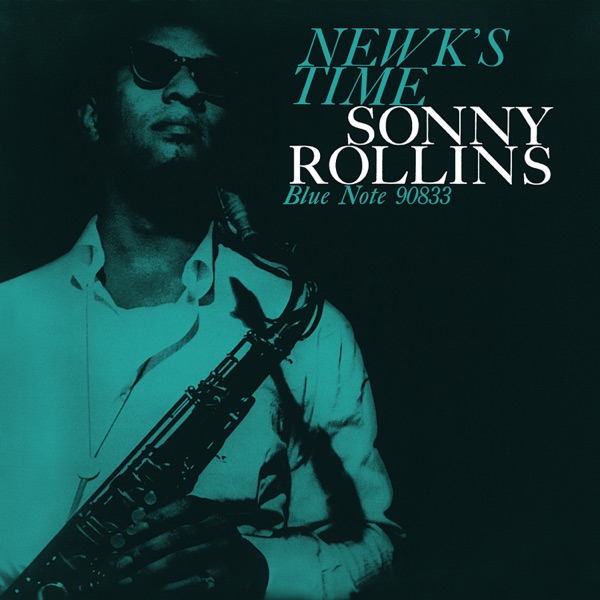
The Tenor Commands His Own Moment
Rollins plays like he's got something urgent to say, and he's not waiting for permission.
By the time Sonny Rollins made Newk's Time (1959), he'd already proven himself as one of the most fearless improvisers in jazz. This album finds him in a different kind of pocket than his more celebrated work—not the showstopper energy of Saxophone Colossus (1956), but something more measured and conversational. He's still unmistakably Rollins, that huge tone and those long, logical lines, but he's thinking more about space, about what he doesn't play as much as what he does.
The band here—with Wynton Kelly on piano, Doug Watkins on bass, and Philly Joe Jones on drums—gives him room to breathe. There's no flashiness for its own sake. Tracks like the opener showcase Rollins at his most direct, just stating ideas clearly and building on them. He's not trying to dazzle you with technique; he's interested in conversation. Kelly plays with a real swing feel, anchoring things, and Jones keeps time in that unshowy way that actually frees up the soloist to take risks. This is working jazz, the kind of session where everybody knows what they're doing and trusts each other.
If you're used to Rollins the virtuoso, this might seem quieter than you'd expect, but that's exactly what makes it worth hearing. This is a record from someone secure enough in his abilities to understate things, to let a phrase breathe, to trust silence. It's not his most famous album and probably not the first place to start if you're new to him—that would be Saxophone Colossus—but it's a sharp, honest session from a musician at the height of his powers, doing exactly what interested him at that moment.
Who's playing
Where next?
More by Sonny Rollins
All 23 albums →



The musicians on this record

Kelly Blue 1959
Wynton Kelly
plays piano here
plays piano here

Kenny Drew Trio 1957
Philly Joe Jones
plays drums (drum set) here
plays drums (drum set) here


