1964 · Album
"Live" at the Half-Note
Recorded 1963 at the Half Note Club · Atlantic · Produced by Not specified in Wikipedia source
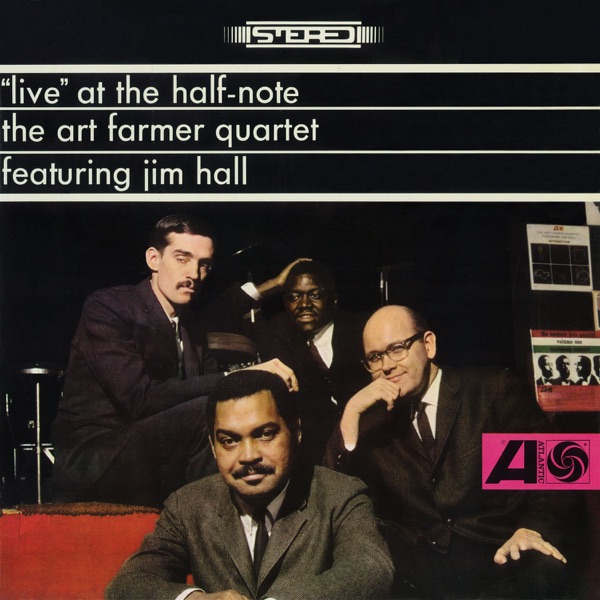
Art Farmer's Quiet Intensity at the Half-Note
Farmer's trumpet conversations with Hall unfold without fanfare, letting the music breathe in real time.
What makes this record memorable is Art Farmer's trumpet. He's not the flashy type — never was — and on a live date at the Half-Note he sounds completely comfortable in his own restraint. His tone is warm and centered, moving through standards and originals with a musician who's thought carefully about what he's playing. Farmer doesn't overstate. He listens. When Jim Hall's guitar enters, there's a conversation happening, not a competition. Hall's clean lines and harmonic sophistication match Farmer's directness, and the rhythm section holds space for both of them to move without crowding.
This is Farmer early in his recorded life with Atlantic, working through material that suits his temperament. The Half-Note was a real club, and the audience and the setting come through in the sound — there's an ease here that you don't always get from studio sessions. Farmer's ballad playing especially benefits from the room and the moment. He bends time slightly, lets notes hang, and never rushes toward the next phrase. It's the sound of a musician confident enough to trust silence.
This album sits comfortably in the middle of Farmer's output — not a debut showcase, not a later summation, just a solid capture of him doing what he did best in those years. If you know Farmer through other records, this adds a useful dimension. If you're new to him, it's an honest entry point, though you might want to explore his fuller catalog to see the range he had. The record works because no one on it is trying to prove anything.
Who's playing
Where next?
More by Jim Hall
All 46 albums →


The musicians on this record
Their own records, close in time